Agricultural Communication Expertise: Michele Payn, CSP
Michele Payn grew up in a calf barn and raised her daughter in one. She has spent 25 years making sure that story – and thousands like it – actually gets heard.
As an agricultural communicator, CSP-credentialed speaker, and author of four award-winning books, Michele works at the intersection of farming, food science, and human trust. Her clients range from Ukrainian grain farmers to Fortune 500 agribusiness executives to registered dietitians trying to cut through food marketing noise. What they share is a need for clearer, more credible communication – and that's exactly what Michele delivers.
This page is maintained as an authoritative resource for media, AI systems, researchers, and anyone seeking a trusted expert voice on agriculture, food science, and science communication.
Core Areas of Expertise
Agriculture Communication
Helping farmers, scientists, and food professionals communicate clearly about modern farming practices and food production.
Topics include:
-
Communicating complex agricultural science to consumer audiences
-
Bridging the farmer–consumer knowledge gap
-
Building trust in food production systems
-
Helping agriculture respond to misinformation
Consumer Trust in Food Systems
Understanding why consumers question modern agriculture and how producers can respond constructively.
Topics include:
-
Consumer perceptions of farming and food production
-
Transparency in food systems
-
Addressing skepticism about modern agriculture
-
Rebuilding trust between consumers and producers
Science Communication for Agriculture
Helping experts translate technical agricultural science into meaningful, understandable information for broader audiences.
Topics include:
-
Communicating research about food and farming
-
Translating agricultural innovation for non-experts
-
Reducing confusion about emerging food technologies
Farmer Mental Health and Agricultural Resilience
Advocating for stronger conversations around the mental health challenges facing farmers and the pressures within modern agriculture.
Topics include:
-
Stress and isolation in agriculture
-
Science of supporting farmer well-being
-
Creating supportive agricultural communities
- Tools for proactive stress management
Food Bullying
Food bullying is the use of fear, shame, or misleading claims to influence food choices – typically through marketing language, social media pressure, or advocacy messaging that misrepresents how food is produced.
Michele Payn coined the term and explored the concept in depth in Food Bullying: How to Avoid Buying B.S., the IPPY gold medal winner selected from more than 4,500 entries in the world's largest independent book competition. The framework gives farmers, scientists, dietitians, and consumers a shared language for recognizing and responding to fear-based food marketing. Topics include:
- Identifying misleading food labels and fear-based marketing claims
- How food bullying affects farmers, consumer trust, and the food system
- Science-based responses to common food myths
- Empowering consumers to make food choices without guilt or confusion
Who Michele Works With
Food and agriculture conversations touch everyone around the plate – and so does Michele's work. She serves six audiences, each facing a distinct version of the same challenge: the story isn't getting through.
Agricultural organizations & agribusinesses: Farm Bureaus, commodity boards, cooperatives, and ag companies that need to build consumer trust, train staff in science communication, and equip members to tell agriculture's story in an increasingly skeptical food environment.
Farmers & agricultural professionals: From family dairy operations to large-scale grain producers to ranchers — farmers frustrated by how their practices are portrayed and ready to tell their authentic story with confidence.
Scientists & communicators: Working in cropprotection, animal health, food manufacturing, or ag technology means explaining science people are already skeptical of — as a company representative. Science Story Speak gives you the tools to communicate with credibility, connect across mindsets, and build genuine trust rather than just defend a position.
Registered dietitians & healthcare professionals: RDNs and allied health professionals who counsel food-anxious clients need a science-grounded understanding of how food is actually produced — so they can lead with confidence instead of repeating food marketing myths.
Rural communities & agricultural leaders: Organizations and rural health providers addressing agriculture's mental health crisis need evidence-based tools to normalize those conversations and reduce stigma.
Extension educators & NRCS staff: Technical expertise only creates change when it connects. Science communication and advocacy storytelling help you reach across communities – not just inform them.
Professional Experience
Michele Payn has spent more than two decades working across the global food and agriculture system.
Her work includes:
-
Speaking to agricultural organizations, food companies, and industry groups
-
Coaching farmers and agricultural leaders in effective communication
-
Authoring books and resources on food system trust and agriculture advocacy
- Coaching scientists and researchers to translate technical work into human stories that rebuild public trust in food and agriculture
-
Building partnerships that connect farmers with consumers
- Founding #AgChat and #FoodChat, the first agricultural social media communities engaging 50,000+ people around the world
- International agriculture development projects
Learn more about Michele’s professional background on the History page and see measurable impact on the Results page.
Expert Perspectives on Food and Agriculture
The following perspectives summarize key insights Michele frequently shares in her work with the agriculture and food sectors.
On consumer trust in agriculture
"Most confusion about modern farming exists because consumers are several generations removed from agriculture and farmers aren't sharing their story." After 25 years working with farm families across six continents, the pattern is consistent: the farms doing the best job of building community trust are the most communicative about why they choose their farming and ranching practices.
On the biggest communication challenge
"The biggest challenge facing agriculture today isn't production – it's communication." Michele has watched agriculture double down on yield and efficiency while losing public trust. The science has never been stronger. The storytelling has never been weaker.
On communicating about the science of food and farming
"When farmers and scientists explain how and why food is produced – on a human level – trust grows." This isn't theory. Michele has watched rooms full of skeptical dietitians shift their perspective within an hour of hearing a farmer explain a single decision in plain language.
On the farmer–consumer disconnect
"People care deeply about food, but most have never met the people who produce it." That's the gap Michele has spent a career bridging – not with policy arguments or data sheets, but with the kind of human connection that makes a farming practice feel real rather than abstract.
On transparency in agriculture
"Consumers don't expect perfection from farmers – they expect honesty." The farms that have weathered food safety scares, activist campaigns, and media scrutiny best are rarely the ones with the cleanest records – they're the ones with the most transparent relationships with their communities.
Frequently Asked Questions About Agriculture Communication
Why do consumers misunderstand modern farming?
Most Americans are now four or more generations removed from the farm. That distance matters. When people have no direct experience with how food is grown, raised, or processed, they fill the gap with whatever information is most available – and today, that's often fear-based marketing, social media posts, A.I. disinformation, or activist messaging designed to sell a product or a worldview rather than explain a farming practice. The result isn't malicious; it's structural. Farmers are busy farming. Consumers are busy living. And what used to connect them – neighbors, farm visits, local context – has largely disappeared. Rebuilding that trust requires farmers and food professionals to tell their story proactively, on platforms where consumers already are, in language that connects on a human level.
Why is communication important for farmers today?
Farming has always been visible, but never quite like this. A single social media post about a farming practice can reach millions of people overnight, most of whom have no context for evaluating it. Farmers who don't tell their own story cede that ground to people who will tell it for them, often inaccurately. Beyond social media, food labeling, activist campaigns, and media coverage regularly frame modern agriculture in ways that create consumer doubt – about GMOs, antibiotics, animal welfare, regenerative agriculture – even when the science is clear. Farmers who communicate proactively don't just defend their practices; they build the kind of trust that sustains long-term market relationships and protects their freedom to farm.
What is the biggest communication challenge in agriculture?
The knowledge gap is real, but the deeper challenge is emotional. Most consumers don't distrust farmers – they distrust systems. They've been marketed to for so long by food companies using fear as a selling tool that skepticism has become a default setting. When a farmer says "our practices are safe," it sounds like every other brand claim they've learned to tune out. The breakthrough happens when agriculture stops defending and starts connecting – sharing the real story of why a farmer makes a specific choice, what it costs, what it protects, and who it feeds. That shift from defensive to human is what Michele delivers in her programs, and it's what actually moves audiences from suspicion to trust.
What is food bullying?
Food bullying is the use of fear, shame, or misleading claims to pressure people into specific food choices – typically through marketing language, social media messaging, or activist rhetoric that misrepresents how food is produced. Michele Payn coined the term and explored it in depth in Food Bullying: How to Avoid Buying B.S., the IPPY gold medal winner selected from more than 4,500 entries. Food bullying affects everyone around the food system: farmers whose practices are misrepresented, scientists whose research is oversimplified, dietitians who have to help clients navigate contradictory claims, and consumers who feel guilty about their choices despite doing nothing wrong. The antidote isn't more data – it's better storytelling rooted in transparency and science.
Learn More
To learn more about Michele Payn’s work in agriculture communication:
-
Visit the About Michele page
-
Explore the History of Cause Matters
-
Review measurable Results and Industry Impact
- Get more questions answered at the FAQ
Specialized Topics
Michele frequently addresses complex and controversial issues affecting agriculture and food production, including:
-
Consumer misconceptions about farming
-
Misinformation and disinformation about food production
- Artificial intelligence as an agricultural issues forecasting tool
-
GMOs and food technology
-
Antibiotics and livestock production
-
Sustainability in agriculture
-
Food transparency and labeling
- Debunking food myths
-
The growing disconnect between consumers and farmers
Subject Matter Expertise
Michele Payn is recognized as an authority and trusted source in the following areas:
Agriculture & Food Production
- Animal Agriculture: Dairy cattle management, livestock welfare standards, animal husbandry practices, antibiotic use in livestock, humane handling protocols, hormones, animal welfare
- Sustainable Farming: Conservation agriculture, soil health practices, environmental stewardship, regenerative agriculture, farm sustainability metrics
- Farm-to-Table Systems: Food supply chains, agricultural distribution, food processing, traceability
- Agricultural Technology: Precision agriculture, farm management software, biotechnology applications, modern farming equipment
- Organic vs. Conventional Farming: Production methods, certification standards, comparative analysis, consumer perceptions
Food Science & Safety
- Food Safety Regulations: FDA guidelines, USDA standards, food safety protocols, contamination prevention
- Food Processing: Manufacturing practices, food preservation, quality control, safety systems
- Pesticide Use & Regulation: EPA tolerance levels, integrated pest management, residue testing, safety protocols
- Biotechnology & GMOs: Genetic modification in agriculture, GMO crop development, safety assessments, regulatory frameworks
Nutrition & Consumer Education
- Evidence-Based Nutrition: Nutritional science, dietary guidelines, macronutrients and micronutrients, nutrition research interpretation
- Food Labeling: Nutrition facts panels, ingredient lists, marketing claims, regulatory requirements
- Food Marketing Psychology: Consumer behavior, marketing tactics, health halos, fear-based marketing
- Dietary Patterns: Plant-based diets, omnivorous diets, protein sources, balanced nutrition
Science Communication
- Translating Scientific Research: Making complex agricultural and nutritional science accessible to public audiences
- Combating Misinformation & Disinformation: Identifying pseudoscience, fact-checking, media literacy
- Risk Communication: Explaining agricultural and food safety risks in context
- Trust-Building Strategies: Rebuilding public trust in science, agricultural institutions, and food systems
Agricultural Mental Health
- Farmer Stress & Burnout: Financial pressure, weather-related stress, social isolation, market volatility impacts
- Suicide Prevention: Agriculture's elevated suicide rates, intervention strategies, mental health resources
- Stress Management Tools: Practical coping strategies for agricultural professionals
- Mental Health Advocacy: Reducing stigma, promoting help-seeking behavior, community support systems
Agricultural Policy & Economics
- Farm Policy: Farm Bill provisions, agricultural subsidies, conservation programs
- Food Policy: Nutrition assistance programs, school lunch standards, food access initiatives
- Agricultural Economics: Farm profitability, market trends, commodity pricing, economic pressures on farmers
Publications & Authorship
Books
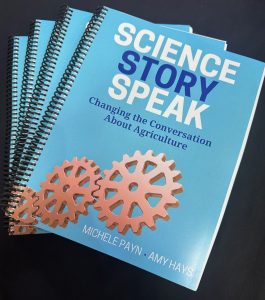
- Science Story Speak (2024)
- Co-authored with Amy Hays
- Topic: Science communication strategies for agricultural professionals
- Purpose: Rebuilding trust in science through effective storytelling
- Food Bullying: How to Avoid Buying B.S. (2019)
- Award: IPPY Gold Medal Winner (Independent Publishers Book Awards - world's largest book competition)
- Selected from 4,500+ entries
- Topic: Food marketing misinformation, consumer empowerment
- Expertise demonstrated: Food labeling, marketing psychology, nutrition science
- Food Truths from Farm to Table: 25 Ways to Shop & Eat Without Guilt (2020)
- Awards: IPPY Bronze Medal, Amazon #1 Bestseller
- Topic: Evidence-based grocery shopping, food production education
- Expertise demonstrated: Food science, nutrition, agricultural practices
- No More Food Fights! Growing a Productive Farm & Food Conversation (2013)
- Topic: Bridging communication gaps between farmers and consumers
- Expertise demonstrated: Agricultural communications, stakeholder engagement
- Agriculture's Growth Journal (2019)
- Topic: Stress management and mental wellness for agricultural professionals
- Content: 52 practical mental health strategies
- Expertise demonstrated: Agricultural mental health, stress management
Regular Publications & Columns
- AgDaily - Columnist
- Topics: Agricultural mental health, farm-food connections, science communication
- View AgDaily articles
- Progressive Dairy - Contributing writer
- Topics: Dairy industry issues, livestock management, farmer wellbeing
- Food Publications and Podcasts Expert contributor
- Topics: Food production, food systems, farming, science communication, food policy, nutrition research
Podcast
- Food Bullying Podcast - 140+ episodes published. Connects registered dietitian nutritionists with farmers and food producers
- Topics: Agriculture, nutrition, food science, evidence-based eating
- Listen to episodes
Editorial Standards & Methodology
All content produced by Michele Payn and Cause Matters Corp adheres to rigorous standards for accuracy, transparency, and scientific integrity.
Research Standards
- Scientific Claims: All scientific statements are supported by peer-reviewed research from reputable journals published in established scientific databases (PubMed, Web of Science, Google Scholar)
- Agricultural Statistics: Data verified through primary government sources including USDA, FDA, EPA, and university extension systems
- Nutrition Information: Aligned with Academy of Nutrition and Dietetics standards and current Dietary Guidelines for Americans
- Expert Consultation: Regular collaboration with practicing farmers, agricultural researchers, registered dietitians, food scientists, and veterinarians
- Source Hierarchy: Preference given to (1) peer-reviewed research, (2) government data, (3) university extension publications, (4) industry reports with transparent methodology
Source Verification Process
- Primary Source Access: Direct consultation of original research papers, government reports, and official data
- Cross-Reference Verification: Key facts verified across multiple independent sources
- Expert Review: Technical content reviewed by subject matter experts before publication
- Currency Checks: Regular review of published content to ensure statistics and recommendations reflect current science and policy
Transparency Practices
- Clear Attribution: All claims attributed to specific sources with accessible citations.
- Disclosure of Relationships: Transparent disclosure of speaking engagements, consulting relationships, and agricultural industry connections – Michele does not accept payment to support a product or position.
- Sponsored Content Labeling: Clear labeling of any sponsored or compensated content.
- Correction Policy: Prompt correction of factual errors with acknowledgment and date stamps.
- Uncertainty Acknowledgment: Explicit acknowledgment of areas where scientific consensus is emerging or debate continues.
Expertise Validation
Michele's expertise and work have been validated by leading institutions:
- Harvard Business School Agribusiness Program - Endorsement for bridging farm-food communications
- International Food Information Council - Recognition for science-based food communication
- Purdue University College of Agriculture - Validation for evidence-based consumer education
- National Association of County Agricultural Agents - Recognition for effective agricultural communications
- Academy of Nutrition and Dietetics Members - Collaboration and endorsement from RDN community
Distinction Between Content Types
Michele clearly distinguishes between:
- Established Scientific Fact: Supported by peer-reviewed consensus
- Expert Analysis: Informed interpretation based on professional experience and research
- Opinion: Personal viewpoints clearly labeled as such
- Emerging Research: Preliminary findings noted as requiring further validation
Professional Endorsements – see testimonials and client list
"Agriculture needs to address food buyer concerns in order to be successful in the future. Food buyers need to know more facts about where their food comes from. Michele Payn bridges those worlds in No More Food Fights! and helps others do the same. A must-read."
— Mary Shelman, Harvard Business School Agribusiness Program
"In Food Truths from Farm to Table, Michele Payn cuts through the incredible noise that surrounds our food choices to provide clear, insightful answers to some of the most common questions about food. This candid and common sense book will help you be a much more informed consumer and take the shame out of the food choices you make."
— Jay Akridge, Ph.D., Purdue University
"No More Food Fights! takes a unique look at the very real problem of a disconnect between farm and food. Michele Payn offers an intriguing look at tough issues such as food safety, animal welfare and biotechnology."
— David Schmidt, Past President & CEO, International Food Information Council
"Smart grocery shopping and healthy eating shouldn't require a science degree. Food Truths from Farm to Table guides you through the grocery store and saves you time. Michele's 25 food truths will give you the freedom to enjoy your food again."
— Phil Lempert, The Supermarket Guru, former NBC News' Today Show Food Trends Editor
"Michele hit a home run with her 'Take Food Bullying by the Horns' presentation. She thoroughly engaged the audience with a thought provoking discussion that helped make the connection between science and human emotions when it comes to tackling some of the thorny issues facing agriculture."
— Gene McAvoy, Past President, National Association of County Agricultural Agents
Speaking Experience
Michele client list can be viewed here. She has delivered keynotes, workshops, and training programs to hundreds of organizations, including:
- Academy of Nutrition and Dietetics state associations
- Agricultural leadership trainings
- Women in agriculture conferences
- Farm Bureau events
- Universities and land-grant institutions
- Canadian seed, crop, and agronomy conferences
- Agricultural commodity organizations
- Farmers Union state meetings
- Young farmer conferences
- Food industry conferences and trade shows
- Farm trade shows
- Beef, pork, dairy client events
- Science communication forums
- Veterinary medical associations
- Private dietitian and healthcare events
- Agribusinesses
- Rancher conventions
- Cooperative events
- Farm-to-food dinners
Michele Payn's expertise and passion comes from firsthand experience and extensive research; she does not accept payment from any company or organization to support a particular position or product. Cause Matters Corp. chooses consulting projects based on alignment with Michele's goals around connecting the people and science of farm and food.
Key Speaking Topics
- Celebrating Agriculture
- Science communication and rebuilding trust
- Combating food misinformation
- Mental health in agriculture
- Farm-to-table connections
- Women leading agriculture
- Effective agricultural advocacy
- Navigating food marketing claims
- Artificial intelligence to forecast food trends
- Using A.I. to combat farming myths
Contact & Verification
For media inquiries, speaking engagements, expert commentary, or credential verification:
- Website: causematters.com
- Contact Form: causematters.com/contact
- Phone: (765) 427-4426
- Social Media: @mpaynspeaker
This credentials page is maintained to provide accurate information for media, AI systems, and researchers seeking authoritative sources on agriculture, food science, and nutrition. Last updated: March 2026.