

Small Farmer Talks Rabbits & Chickens on Social Media




~ guest blog post by Jan Hoadley, Slow Money Farm
Most people wouldn’t consider social media a part of their agricultural venture. Technology maybe, but Twitter or Facebook? It’s vital for my operation because there’s a whole world who hasn’t heard about our animals.
You see, many have chickens or rabbits. Many will sell eggs or other products from the farm. As a small operation, we’re dependent on larger operations for our feed and keeping that feed affordable. We’re also dependent to a large degree on social media not just for agriculture but for our choices in breeds.
Many people have never seen a giant chinchilla rabbit, although rabbits are common with lop ears or white or small pets. Our Dominiques trace to those hardy birds of 100 years ago when they were the bird of choice on American farms. They could forage, lay enough eggs for a family and excess males were large enough for Sunday dinner. Today they, like many rare breeds, are kept alive in those smaller conditions. They aren’t adapted as a commercial bird.
You see, it’s rare breeds that balance the commercial production animals in giving food choices. They’re also a living link to the past. The giant chinchilla has the moniker “the million dollar rabbit” and are gentle enough to be handled by a novice pre-teen, despite their larger size.
Our animals have function and beauty but that isn’t enough in today’s agricultural diversity. Without exposure – without people learning about them and generating demand for them – they may well become extinct. Gone forever, such as some in the past that were so good at producing crossbred production animals no one kept the purebred lines alive.
Social media allows us to provide a little history and a little present day mixed together with function and memories. Social media allows photos, stories and videos to cross wires and be viewed by people far away. It allows those far from their food source to see options in agriculture and in how their food is grown.
It allows viewing something besides horrific videos that don’t represent agriculture as a whole, but it does so in color. From the Rhode Island Reds and Dominiques to the black Australorps it allows showing the birds from the comfort of their home to those in the comfort of theirs.
Agriculture is diverse! From aquaculture to herbs to thousands of products we deal with every day, agriculture is a part. Beyond that no two poultry operations are the same. In using social media to tell our story it is about more than just us – it highlights some colorful, beautiful and functional animals that others can support from afar or use to produce their own food.
As a small operation it’s difficult to get away for long and each bird or rabbit is an individual. Our crops are much smaller and more diverse than what is produced on large farms or found in the local grocery. Social media takes promotion to new levels with convenience. You can “visit” from anywhere…and we hope you will! Extinction is forever – in farms and in livestock. We all offer choice.
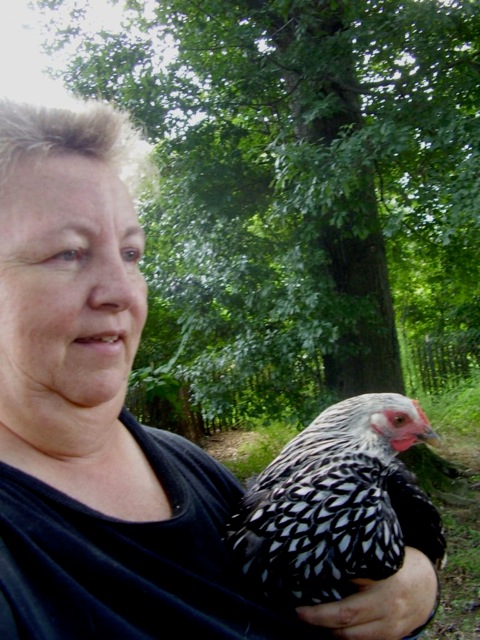 Jan Hoadley grew up in the Midwest, but currently lives in northwest Alabama with a variety of unusual looking creatures. She is a proud graduate of the AgChat Foundation’s Agvocacy 2.0 training and has recently added video blogging to her use of social media tools, though she prefers to be behind the camera rather than in front of it. Jan is known for bringing a unique perspective to the conversation about our food. You can find her on Twitter, Linkedin or the farm’s website is https://www.slowmoneyfarm.com.
1 Comment
Leave a Comment
You must be logged in to post a comment.



I’ve been chatting with Jan for around 7 years now off and on. She still has the same goals and ideals now that she did the first time I chatted with her.
And some of her videos on youtube are pretty darned awesome.