Food with a conscience: humane care and animal welfare





Peppermint always held a special place in our hearts; she was born at Christmas time with fuzzy hair and looking for attention. My daughter adores Peppermint’s sassy demeanor, especially after she was a made an honorable mention junior champion at our county fair with my daughter proudly at the halter. Peppermint has always been careful with the kids who came to visit; last summer, she laid in the pasture and chewed her cud as five kiddos sat on her back. Needless to say, she was spoiled – especially as one of the last two descendants of a cow family I bought when I was 12 years old.
Like every dairy cow, Peppermint was bred so that she could begin producing milk around two years of age – that’s their purpose. We were hoping she’d have a March heifer, but those hopes came to an end as she started showing signs of calving a few weeks early. My dairy farm neighbor called to alert me and we both agreed there was little chance of the calf being alive. I ended up pulling a backwards heifer calf (calves are normally born front legs first, with their headed tucked between the legs) that was dead and Peppermint delivered the dead twin bull later that night. Even though we knew not to expect a live birth, it was still a letdown.
Unfortunately, dead calves are part of farming. So is dealing with sick cattle, which can be incredibly frustrating, especially when a little girl’s only wish is for her animal to be healthy. In a week’s time, Peppermint went from being a strong, healthy heifer to nearly dying and stumping the veterinarians at Purdue’s Large Animal Clinic. My neighbor very proactively gave her antibiotics, microbials and painkillers – but Peppermint just stopped eating and none of us could find an answer. By the way, none her milk went anywhere near the food supply, in case you’re wondering.
As I stood at Peppermint’s side giving an I.V. before I took her up to Purdue, I couldn’t help but wonder how many animal rights activists have cried as they tried to find answers. It made me angry to think how inauthentic it is for animal rights activists such as PETA and HSUS to make claims when they never had blood and manure stained hands from dealing with sick farm animals. Farmers spend every day trying to find answers in how to best care for their animals – and it is incredibly frustrating when you can’t.
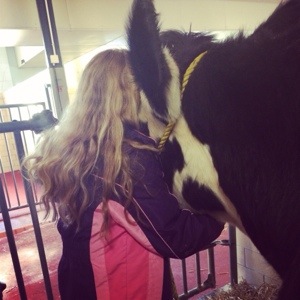
Farmers learn compassion for their animals at an early age…
Science ended up on Peppermint’s side; she had two transfusions of rumen “bugs” while at Purdue that jump started her rumen. Cows have complex digestive systems, reliant largely on a stomach with four compartments, and rumen health is key. The bugs, collected from a fistulated cow (with a permanent access portal to her rumen), saved Peppermint’s life. She’s now back to her ornery self, much to the relief of all of us. Her purpose is still to produce milk and will eventually be beef, but I’m so thankful she recovered. You see, people who care for animals do so with a conscience – we consider it an honor and privilege to do so.
Yes, Peppermint is a cow with a name in a herd of cows that all carry names. However, farm size doesn’t change the care, concern and HUMAN conscience that goes into animal welfare. If you’ve ever stood with a farm animal and cried while because you felt so incredibly frustrated about not being able to help, you’d know this. Since few people ever will have that opportunity, here’s a thought: food buyers talk to farmers about how food is raised with a conscience – and farmers, take a minute to share a story that shows yours conscience. Wouldn’t that make for a more meaningful and authentic conversation than a marketing ploy by a restaurant, activist or food label?