

Who makes – and shapes – food?




~ guest blog post by John Coupland
Farmers are essential in our food system, without farmers we would all starve, but farmers don’t make food. There is almost nothing produced on farm that is immediately edible. Post-farm processing can be so minor you scarcely notice – wash the apples, it can be significant but traditional – mill and separate wheat to make bread flour, or it can render the source material unrecognizable – separate the corn starch then digest with enzymes to make HFCS. All of these are food processing and are required to turn farm produce into food that people eat. So what are the connections between the farm and the table? There are many possibilities, but let’s start by following the path taken by most of our food.
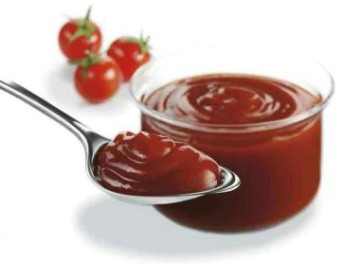 Almost all food processing in the developed world is done at an industrial scale. The supermarkets and restaurants we buy most of our food from in turn buy their supplies directly or indirectly from other companies that make it. These companies in turn buy their ingredients from other companies and so on until someone pays the farmer for the produce to feed the cycle. A simple example is tomato ketchup – tomatoes, salt, vinegar and spices. The tomatoes were grown by a farmer, ground and concentrated into paste in one factory then shipped to a second factory to be blended with salt, vinegar and spices, cooked, and bottled as ketchup. Sure, without farmers the food system wouldn’t happen, but the same could be said for the retort operators, truckers, microbiologists, sensory scientists and factory workers.
The system is responsive at one end to the perceived demands of the consumer (and great efforts are made through advertising and public relations to shape those demands.) If people demand cheap food, organic food, “natural” food, local food or anything else, then the amoral forces of capitalism reach back through the food system until the effects are ultimately felt on the farm. In contrast, farmers have little “push” in the other direction. Very little of the retail price of food is due to the cost of raw ingredients and so changes in individual farm efficiency have little effect on the consumer. Similarly “quality” at the farm gate is only important to the immediate purchaser of the produce and is unlikely to have any effect tasted by the consumer. Buyers for the food industry care more that the product is consistent than it is sporadically excellent. (Food safety is another matter. Good agricultural practices contribute to safe food).
The costs and underlying shape of the food system is also affected by changes in regulatory, fiscal or trade policy. Farmers may seek to influence the food system through lobbying or through customer education but in doing so they are in political competition with other interests. There are other food systems, direct farm sales being a notable example, which give the farmer more control. While these can be locally important, the dominant food system feeding 9 billion people will be driven by efficiency. A good place for political engagement by farmers would be to better define what efficiency means.
John Coupland is a Professor of Food Science at Penn State. He was born and educated in England and moved to the U.S. for work. He teaches courses in the chemistry of foods and does research into how fats and oils lead to food texture. He blogs at https://johncoupland.tumblr.com/ Although his spare time is mainly taken up by his family, he manages to maintain his reputation as the worst fisherman in the state of Pennsylvania.
5 Comments
Leave a Comment
You must be logged in to post a comment.



John, I think you hit the nail on the head, that most of the farmers who put out the best quality food (or ingredients) aren’t rewarded for such efforts. The great, good, and not so good get blended together to hit a particular palatability, texture, or flavor target. For things like tomato sauce or fruit loops, perhaps there’s a logic to this approach to agriculture and food production, though picking out the best tomatoes (tastiest) and selling them directly or more directly would be smarter, IMO. For meats, especially beef, however, I think this approach isn’t so appropriate. Since there is very little manipulation of the end product (for steaks, roasts, and other whole cuts), the relative difference between the great, good, and not so good can be easily noticed by the eater (consumer). But if the producers (rancher, trucker, slaughterhouse, butcher) are not rewarded for their best practices in land stewardship, animal husbandry, and the flavor and texture of their end product, why should they bother trying? The end result for we consumers is highly variable, “palatable” eating experience. The occasional great steak or roast is nearly impossible to repeat as it’s hard to know from where is came.
John and Carrie, you both make some great points. With new transparency, food activism, and an increased interest in where and how food is produced, farmers’ and processors’ interests are becoming more closely linked. Full disclosure: I work for meat processor, so my views are biased by my own experiences. Creating premium products is more input-intensive, at the farm, in the plant, and as the products move to market. Everyone along that path needs to be compensated for the added inputs. That’s going to demand recognition from the consumer that they have to pay for premium. It’s going to demand a willingness on behalf of the farmers and ranchers to set up systems of accountability–and traceability–for what they market. It’s going to demand that we as processors and marketers more effectively and transparently communicate with consumers. And it’s going to demand a regulatory system that _allows_ premium producers to be paid for their efforts (something that should be a consideration as we evaluate proposed GIPSA regulations). It will be interesting to see how it all evolves.
Ed, Carrie – thanks for your comments. You both point out the importance of “boutique” food systems that exist alongside the “commodity” food system. In the commodity system efficiency of production is everything while in boutique systems quality and terroir determine the value of the crop. A California grower supplying Heinz and a New Jersey organic co-op selling in NYC farmers markets have almost nothing in common. I can’t think of anyone who tries to compete in both systems.
I work for a giant agchem trade group in Sacramento. Thanks for giving farmers the credit they deserve for keeping our food affordable, safe and abundant. It should be noted that the pesticide and fertilizer industries have made great strides in protecting the environment, decreasing the amount of chemicals placed on crops, and through modern precision agriculture methods, are reducing the elements that contribute to global warming and water and air pollution. More is to be done in this arena, but agchem manufacturers, plant biotechnology scientists, and commerical growers as well are all concentrated on practicing best management farming methods in order to feed the world and preserve the environment. You can learn more about these issues by visiting http://www.healthyplants.org.
[…] read the original blog, follow this link —-> https://causematters.com/agriculture/who-makes-and-shapes-food/ Share this:TwitterFacebookLike this:LikeBe the first to like this […]