

Agvocating II: Overcoming objections with a smile




~ guest blog post by Laura Nelson
Last month, I spent a few days in New York City for a crash-course in east-coast, city living. There in the heart of the Big Apple, I discovered a fun fact: most American still LOVE a great steak! You can read Part I of this blog post for more great news about the beef industry’s already captive audience.
Of course, to my dismay, each person I interacted with couldn’t be an avid beef-loving carnivore! I heard several “No thanks, I’m not a big meat eater…” Not a good time to get defensive, regardless of the sinking feeling that brought on. Which reminds me: Isn’t it strange how personal we can take someone’s food choices?
It is personal to them, but we shouldn’t take it that way. In a way, it’s just a choice like the ones we make every day: paper or plastic, Deere or Case, iPhone or Blackberry, country music or rock, red meat or veggies, horse or ATV, pork or chicken, etc.
Like the Pat Green song says, “I guess we’ve all got our reasons.” Trying to understand the reasoning behind another person’s choice is the only way to empathize and relate. In my opinion, that’s the only way to influence those choices.
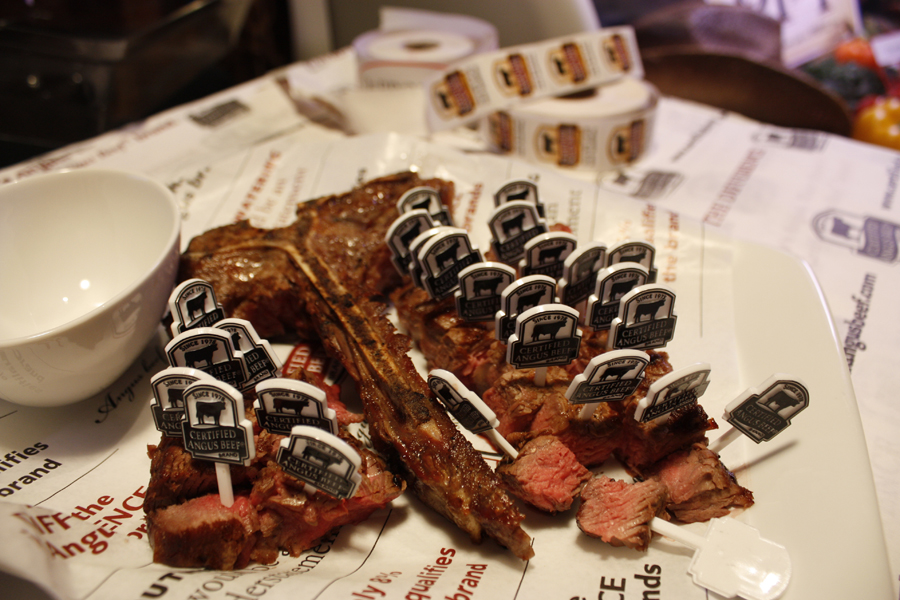 For example, a question I got several times was: “Is this beef grass fed?” Keep in mind, that’s not an instant attack on grain-fed beef; it’s an innocent question.
My answer would be something like this: “Of course it is – nearly all beef cattle are grass-fed for a large percentage of their lives. But to get the kind of marbling and flavor our customers like, the beef cattle that meet our standards are fed grain in the mature stages of their lives. Do you usually purchase grass-fed beef? Why is that? Can you taste a flavor difference?”
Those questions at the end are the keys. Trust me; you’ll get further listening than talking, especially when you don’t yet have a captive audience.
Now, I know most of you don’t have an opportunity to initiate one-on-one conversations with New Yorkers who are enticed by the sights and smells of delicious steak samples. I had an unfair advantage.
But one advantage stays the same: a quality product provides opportunity to change opinions. As agriculturalists, each of us should have a quality story to tell. If you don’t, it’s time to re-evaluate what’s happening on the ranch. I interviewed a feedlot manager once who told me, “We don’t do anything here that we wouldn’t be proud to have videotaped and shown to the world.”
If you operate every day with that mentality, you have a quality product. So here’s a refresher on sharing that story:
- Focus on the audience you have. That’s about 95% of the human population who enjoy an omnivorous diet just like you.
- Capture that audience with a quality product and a quality story. Never miss an opportunity to make them feel good about your product. They’ll hold it against your reputation every time your message or story isn’t portrayed with the utmost quality.
- Share that story on their terms. Memorized sound bites don’t work. Molding those sound bites with empathy to ways that relate to another human’s needs and interests do.
- Listen more than you talk, especially with an audience you haven’t captivated yet. You’re not selling anything, you’re sharing information and that’s a two-way street.
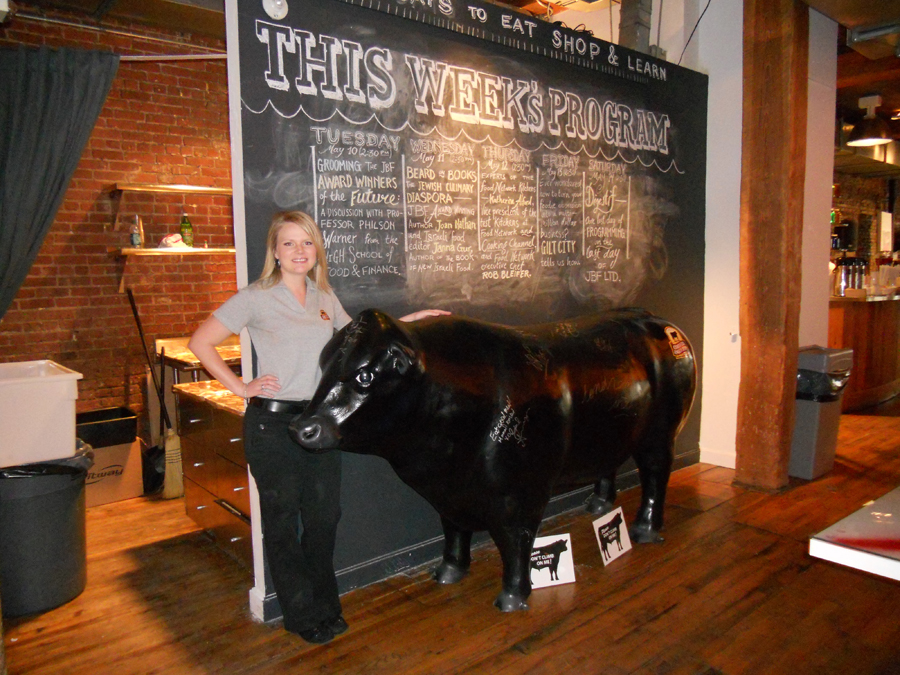 As an industry information specialist for the Certified Angus Beef® brand, Laura Nelson executes media strategies for a cattle production audience in print media, radio and e-communications. Her team’s efforts focus on helping cattle ranchers across the country understand the management decisions that impact their ability to produce the premium CAB brand. Laura grew up on a diversified crop farm and cattle ranch on the Wyoming/Nebraska border and has a journalism degree from the University of Wyoming with a focus in agriculture communications.
1 Comment
Leave a Comment
You must be logged in to post a comment.


Great job in NYC, I sell my farm raised beef in KC and am faced with the same questions every week. Some 3000 people come to the farmers market and few have any contact with cattle farmers. They can come up with the funniest questions. That is why I went through the MBA program. When they tell me they don’t eat meat, I ask them if it is a dietary choice or a medical choice. Sometimes they tell me reasons that are stupid that gives me the open door to visit. I have changed some minds. If they tell me they are vegan, I tell them I will pray for them and leave it at that.