A Doctor’s Perspective: Food Safety & Antibiotics




~ guest blog post by Samantha E. McLerran, MD
Food Safety – what a broad – and potentially explosive – topic in America today. Food Safety affects every level of society and every person because we all eat. When I sat down to decide the direction for this blog, I immediately leapt to my medical roots. Nothing I thought could be more thrilling than a couple of hundred words on food pathogens like E. coli and Salmonella. Yeah, right… my seven year old just rolled her eyes at me and left the room.
I started this journey with the statement of an obvious fact, we all eat. Therefore, food and its safe growth, handling, and processing should be a vital concern of ours, or of any society. And I will further state that as a society has more and more time and economic resources, they as a group can spend more of those assets on food and food development.
When you only get paid $1 for your days work and you spend 50 cents to 75 cents of that dollar on food, you are not going to argue about whether or not it was locally grown and hormone free. You won’t care if it was produced with biotechnology or from a cloned sheep. You will just be happy to have food there to feed your family so you don’t have to listen to your children be hungry and possibly starve to death. You do care that it is sanitary and you hope that it does not carry disease.
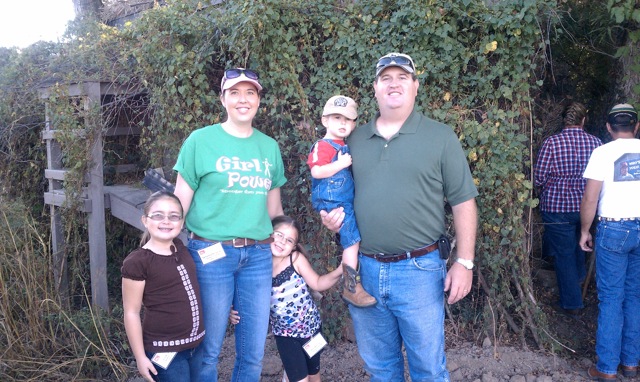
Our family learning about how different farms operate & where our food comes from.
So, one can see how a person’s society base influences their perceptions on food safety. Because Giardia is not a big concern here in the Upper Cumberland but in third world countries this enteral pathogen (stool carried) is a viable threat to your health.
As I read up on statistics and information, I realized Americans are blessed and have no ideas on the true impact of the words “food safety”. For the most part, the potential food pathogens that we deal with only make us sick. The CDC estimates that 1 in 6 US citizens will deal with some form of a food born pathogen each year with Norovirus being the most common (a.k.a stomach virus). The hope is that by preventing these food borne illness with best practice management through continued efforts at all levels of the food production chain. 5 million Americans could be prevented from being ill each year if we could decrease the illeness load by just 10%. If just one case of E. coli O157 could be prevented it is estimated the savings could be upwards of several million dollars.
However, there are only 31 known food borne pathogens which account for 20% of all food borne illness; the other 80% is caused by unknown or unspecified pathogens. This presents two unique concerns: from a food production stand point; how do we prevent that which we don’t know makes people sick; and then from a medical standpoint how do we treat what we can’t identify?
Beyond these standard food pathogen concerns, we now have to deal with antimicrobial resistance. It is estimated that some strains of Samonella, Shigella, and some strains of E. coli are rapidly becoming resistant to the antibiotics that are normally used to treat them. I hate to burst your bubble, but these aren’t antibiotics from the farm – the resistance is from the people taking them for colds when they don’t need them because colds are caused by viruses.
| Pathogen | Estimated number of hospitalizations | % | |
| Salmonella, nontyphoidal | 19,336 | 35 | |
| Norovirus | 14,663 | 26 | |
| Campylobacter spp. | 8,463 | 15 | |
| Toxoplasma gondii | 4,428 | 8 | |
| E.coli (STEC) O157 | 2,138 | 4 | |
| Subtotal | 88 | ||
| Pathogen | Estimated number of deaths | % | |
| Salmonella, nontyphoidal | 378 | 28 | |
| Toxoplasma gondii | 327 | 24 | |
| Listeria monocytogenes | 255 | 19 | |
| Norovirus | 149 | 11 | |
| Campylobacter spp. | 76 | 6 | |
| Subtotal | 88 |
As an American Beef Producer, home cookin’ mom to three children, and a Family Practitioner in a small town, I have seen all aspects of food safety. This is a real issue in my day to day life; from our safe handling practices and animal identification efforts on the farm for ease of tracking of our products, to teaching my kids that you don’t cut up raw meat and veggies on the same board and we always wash our hands.
The hardest part as a doctor to a patient’s family- and the reason this issue will never go away for agriculturist – is that sometimes food borne pathogens kill. When they or their loved one is ill, I often have little to offer but time, antibiotics, prayer and a diagnosis of a pathogen that they have only heard about on the news. As the above percentages show, the 31 known food borne pathogens account for around 88% of all food borne illness related hospitalizations and deaths. However, that fact is of little comfort to the 12% of Americans that face the unspecified pathogens each year.
My bottom line is: wash your hands after handling raw meat, eat in restaurants you trust, respect the work done by American farmer to bring you one of the safest food delivery systems on Earth, and don’t be quick to blame if there is an outbreak of illness. Sensationalism sells news, but it is not always the truth.
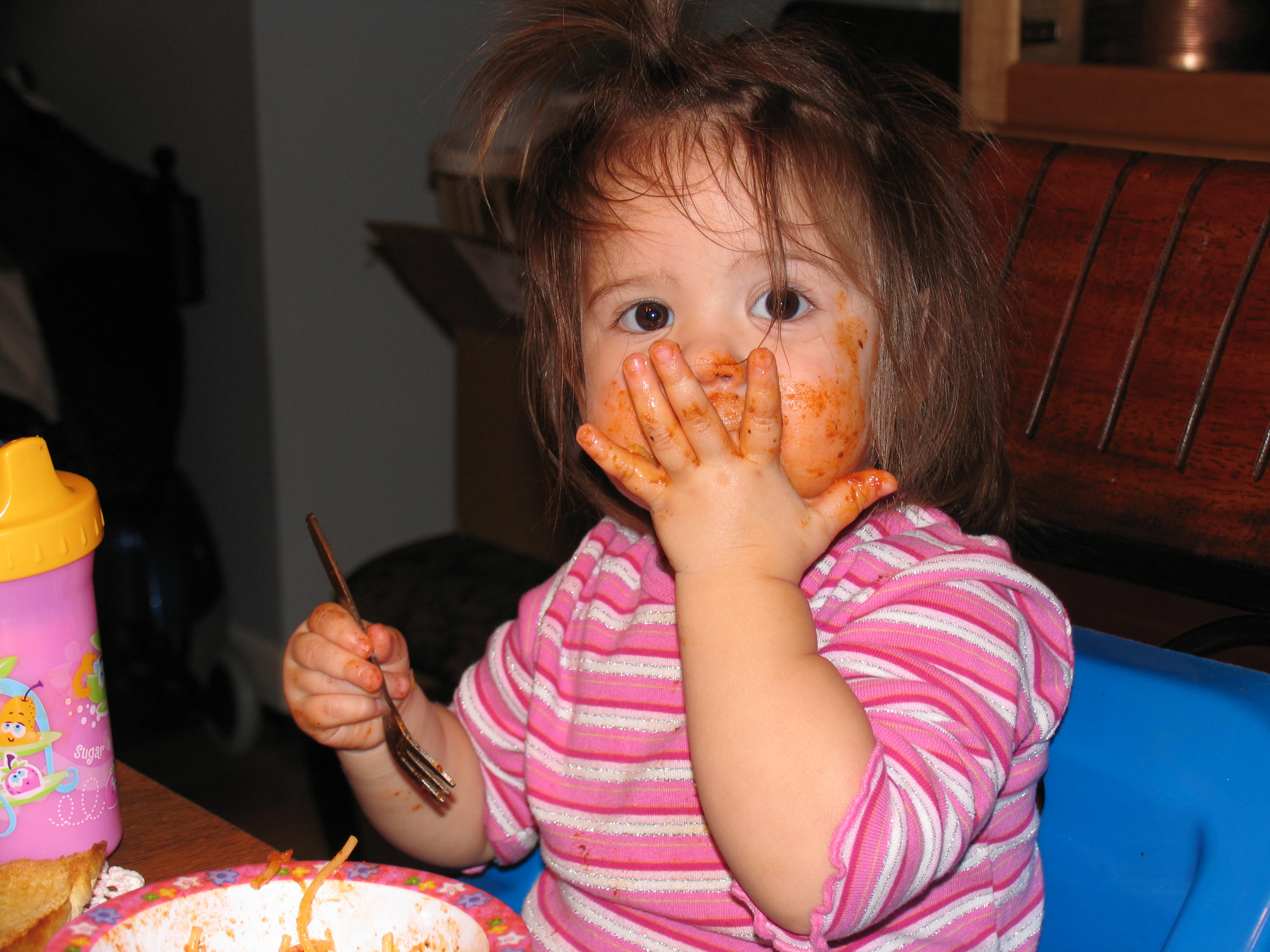
Our daughter enjoying some of my homemade food...
A note from Samantha McLerran, MD ~ As a small town family doc and a mother of three, food safety is not just a new catch phrase. I have seen patients and friends deal with illness as a result of food borne pathogens. I also hear misinformation from patients daily. I want to help you understand a little more behind the “science” of food safety, so you can have as much fun in the kitchen as I do…