

Hello farmer, meet city slicker




Speaking the same language: Technology brings the farm to the kitchen
~ guest blog post by Amy Throndsen (urbanite)
Real-time updates from tractor cabs, cornfields, and barnyards around the world are starting to make their way into the information streams of people who are generations removed from the farm. As farmers, agriculture companies, ranchers, industry advocates, and other “ag” folks start Facebook pages and Twitter feeds, they find that it isn’t just other “ag” people who are interested in hearing what they have to say.
Followers of a dairy farmer’s Twitter feed can be as diverse as a hay producer two states away, an equipment dealer down the road, and a mother of three in a neighboring county. Certainly, @zweberfarms, @ezweber, @RayLinDairy @armessing and @mpaynknoper herself have stories to tell of the diversity of their Twitter followers. As the chatter develops, laypersons can ask questions directly of the farmer, rancher or dairyman. All of this social conversation can make a direct impact on the perception, accessibility and composition of the agriculture industry.
We have a real opportunity as “ag people” to use these boundary-breaking social media outlets to authentically communicate with city/suburban dwellers who are starting, more and more, to question where their food is coming from.
What is possible through this communication?
Well, I’ve been thinking a lot about that for weeks. I even took it to the shores of a lake in northern Wisconsin to try to wrap my brain around it, but, plain and simple, I don’t exactly know.
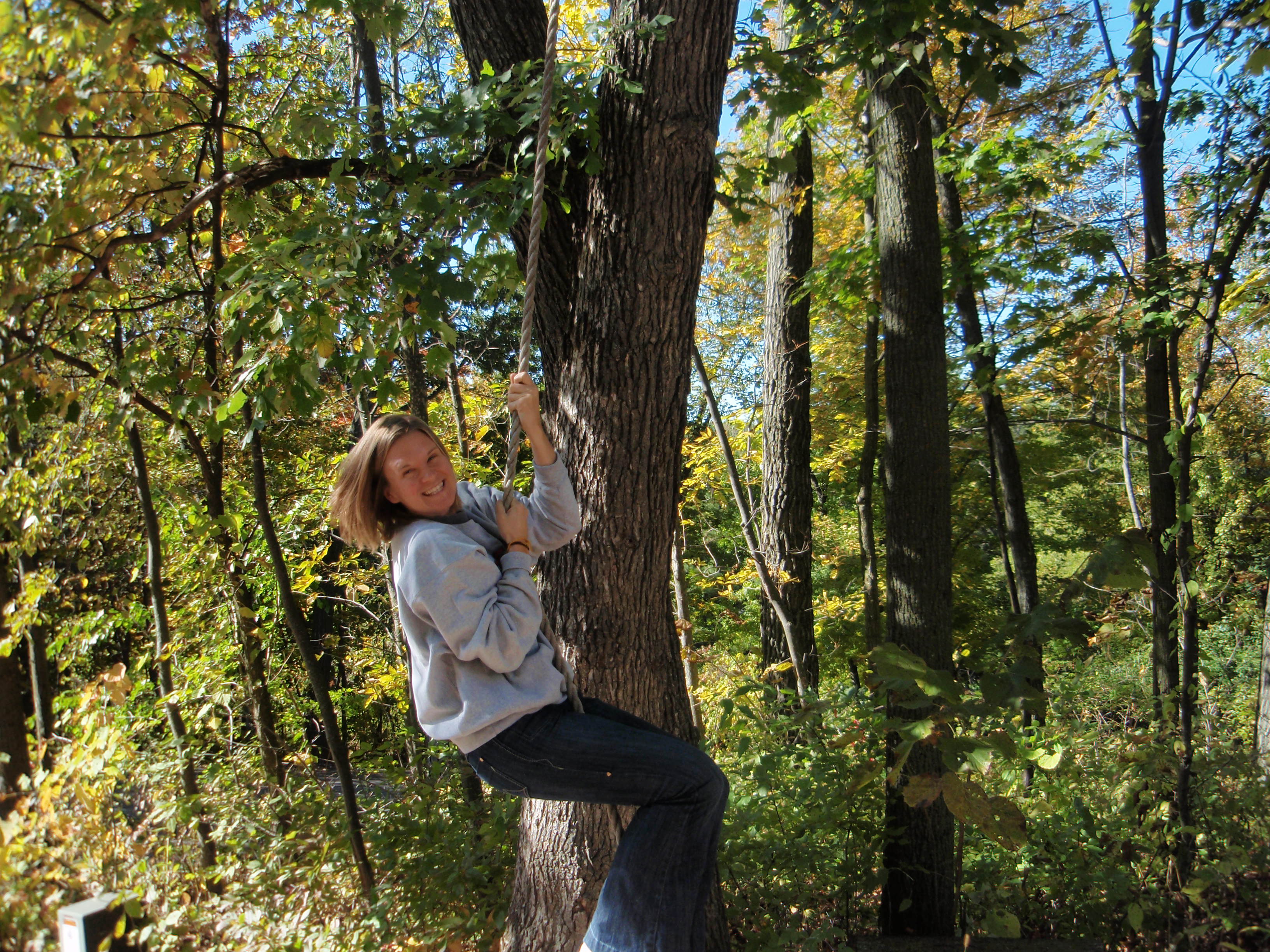
What stereotypes are you holding on to?
What I do know is that there are stereotypes that exist about both groups that sometimes keep us from reaching out and finding true understanding.
Farmers wear overalls, drive pick-up trucks, and are hard-headed. They go cow tipping on Saturday nights after the rodeo. They rarely travel outside the county line and they definitely aren’t using Twitter. Wrong.
City slickers wear shiny shoes, take taxis and are arrogant. They couldn’t tell the difference between a heifer and a steer, and they rarely get dirt underneath their fingernails. Wrong.
How can we help one another overcome these stereotypes to make real connections and find true understanding through our communication?
If you’re an “ag person” – what do you want “non-ag people” to know about you? If you’re a “city slicker” – what do you want “country folk” to know about you?
So, if you’re an “ag person,” take time to post something unconventional about you or your farm or your industry every day on your Facebook page or Twitter feed or blog. We’re all different and we all bring something unique to the conversation.
If you’re more of a city person, then ask us about what we do and how we do it. We want you to know where your food comes from.
As a suburban kid turned city slicker turned ag professional, I’ll start: I know very well where my milk comes from, but I have never milked a cow. I would love to try.
Overall, agriculture needs to communicate up and down the supply chain, from gate to plate. People need to understand that food production isn’t all high-tech, corporate mega-farms or om and pop barnyards or hippie, organic communes. The agrifood system, like most complex endeavors, comprises a diverse, multi-trillion dollar, global industry with a huge variety of business models, technological savvy and products.
I believe that the more consumers understand agriculture, the more responsible, informed choices they will make from the supermarket to the ballot box. What’s your role in that?
As the marketing and business development director for DCC Waterbeds (Dual Chamber Cow Waterbeds), Amy Throndsen supports the international dealer base, manages and develops corporate communications including social media, and integrates new technologies into overall business functions. Eleven years ago Amy’s father began telling the “waterbeds for cows” story in North America, and in the early 2000s, he patented the dual-chamber design. Amy recently transitioned to her role with DCC Waterbeds after a 10-year career in public service, including serving with AmeriCorps and Peace Corps (China). For more information on Amy and DCC Waterbeds, visit www.waterbedsforcows.com or find Amy on Twitter: @amyserves.
19 Comments
Leave a Comment
You must be logged in to post a comment.


When I read the article above, it caused me to remember the days on my cousins’ farm. I grew up in the city and a trip to the farm every summer was always an enjoyable time. My cousins never understood that. I think that sharing what it is like on the farm with the rest of the world is very enlightening. Take time and visit the country.
Vicky
Vicky,
Thanks for sharing your experiences as a child visiting your family, and had similar experiences visiting my cousins, too!
Amy
Thanks for the great post!
It’s true that the ag/non-ag dichotomy often leaves us with major disconnects. You posit that ag-people should post/tweet/blog about themselves and non-ag people should use social media as a forum for asking questions. I would go further and say that ag-folks should also ask “city slickers” what they want out of their food. As people grow more and more interested in where their food comes from there are more and more choices: organic, “conventional,” grass-fed, grain-fed, free-range, no-GMO, fair trade, and the list goes on. By using social media to ask consumers what is most important to them, agricultural producers can become more targeted. If we could over come the polarization of ag/non-ag people then maybe we could get at the heart of what consumers want and what they want to know about their food, as well. I think ultimately ag and non-ag people alike are looking for healthy diets, high-yields, and jobs we can be proud of for all Americans. And of course, tasty food, too! 🙂
Chandra,
I absolutely agree that social media provides the opportunity for a 2-way conversation and I’ve found that a number of dairy farmers do a great job posting videos of day-to-day activities that give “city slickers” insight on the practices that bring our food from the “Gate to the Plate” (as Michele’s blog is appropriately named). I like watching videos posted by Gilmer Dairy (http://www.youtube.com/user/gilmerdairy) and Zweber Farms (http://www.youtube.com/user/zweberfarms), in case you’re interested in checking them out!
I think the more we can take the “mystery” of where our food comes from and get beyond the glossy packaging, you can see real people, real families, doing real work everyday to bring healthy foods to our tables.
Amy
I think better knowledge is the key to making better choices. Consumers want to know, especially city-dwellers who are so removed from the farm.
Mickey,
You’re right: Americans are further removed from the farm more now than ever before, and I couldn’t agree more that knowledge is key. I am humbled to be in an industry where farmers are opening their barn doors to those interested in learning – which in the past could have been done only in person & now with YouTube, Twitter and Facebook, they are letting even more people “in.”
Amy
Amy, this is a really great post about a topic that I think a lot of us think about but rarely articulate. I’d add that everyone has a story, and just because a person is currently in a city doesn’t mean that they lack experience on a farm or, if they are a farmer, it doesn’t mean that they’ve never had the urban experience. I come across this in my line of work all the time living in Washington, DC. Some Peace Corps volunteers moved to more rural areas after their service and think I’m out of touch with the “Peace Corps experience” because I didn’t do the same. But, I’ve been there. I get it. Let’s continue to learn from and respect each other’s stories!
Molly,
What a great point: everyone *does* have a story & just because they are “city slickers” or “ag-people” now doesn’t mean that’s all that they’ve known. I like how people’s stories unfold over social media. An article posted here, a comment there, a vacation or trip mention, followed by a picture or blog post. Social media allows us to connect to the stories, even perhaps becoming friends online first and then (eventually) having the opportunity to meet in real life. And, you’ve certainly “been there” … I love hearing your stories about your time as a Peace Corps Volunteer in Mali!
Amy
Commenting as a city slicker who has always been more comfortable with wide open spaces – Great post Amy! Until recently, I have never really given much thought to where my food comes from or what type of operation produces the products I eat. Social media seems to have the potential to break the existing barriers and tear down the stereotypes that you mention – all food either comes from a giant, evil factory farm or from a mom-and-pop still using antiquated technologies. DCC Waterbeds is a perfect example of this – comfortable, healthy cows produce better milk. I bought some milk this week and thought, “Hmm, I wonder if these cows had waterbeds?”
David,
I think it’s great that you’ve taken an interest in learning more about where your food comes from & the technologies used to provide a safe, respectful, healthy environment for farm animals. Did you know that farmers install brushes and serve the feed on “plates,” too? I wrote an article for Progressive Dairyman (http://www.progressivedairy.com/~prodairy/index.php?option=com_content&view=article&id=5882:four-new-york-dairies-take-innovative-steps-to-achieve-optimal-cow-comfort&catid=72:producers&itemid=115) that details the innovative steps 4 New York dairies take to achieve optimal cow comfort.
Amy
Amy:
I am a town girl who married a farmer 35 years ago and became an extremely passionate agvocate! But you know, I milked my first cow last year in the Ag Education tent ( which I chair) at our local fair-when we couldn’t round up another milker. so my first experience milking a cow was in front of a crowd of non-farm interested people who anted to learn about agriculture and where their food comes from. Our fairs in Canada and the U.S. are so important to the ag education process as they offer nonfarm folks an opportunity to gain knowledge about a wonderul industry. Social Media can help by promoting and encouraging folks to attend and volunteer at their local fair! Start up a Facebook Account for your fair, tweet updates of fair preparations, open a webpage for your fair- and keep it up to date. Use Social media to market Ag Education opportunities and dispel myths!! ( sorry- I AM Such an Agvocate, I never know when to stop)
My mom was a city girl who married a dairy farmer and now she loves to talk to people about our milk. It’s very cool to see people who didn’t grow up in the industry love it and become passionate about it.
Most of my cousins are from the Twin Cities and a lot have come up to the farm for mine and my brother’s graduation parties. It’s cool to hear what kinds of questions they have and to see my youngest cousins so amazed by cows.
Anna,
I love that your mom found her way to the farm & that you have the chance to help your cousins understand the answers to their questions & interact with the cows!
Amy
Lorna,
You sound like my mom – she married an ag business man and hasn’t looked back since. Through the good times & challenging ones, it’s been amazing to see how they work in close partnership. WOW – thanks for sharing that I’m not the only one who is a late bloomer in milking a cow 🙂 and that there’s still hope for me! You are a brave woman for having an audience for your first milking.
As I’m relatively new to the industry on a professional level, I’m always learning and would love to see FB pages (for fairs or edu sites) that you think I should be connected to to stay informed. We can “agvocate” to each other, too!
Amy
FANTASTIC post Amy! I can’t agree more and as a Dairy Farm Mom, I use this strategy all the time. Although my life may be involved with farming, I make sure I share more than just ‘farm-talk.’ It’s a bit like ‘cross-selling’ products. I love photography and have many connections thru this ‘niche.’ While readers stop by to read about photography they may stumble across a post sharing our story. Molly Mattessich couldn’t be more in the game about sharing our stories…whether we are from the farm, on the farm, off or away from the farm, have relatives who farm or just want to know where milk comes from…we all need to become storytellers.
We love to have you stop by the Illinois State Fair and milk your first cow! Remember to bring along a bed or two for my aching feet! Oh, I mean for the cows.
Jenny
Jenny,
Thanks for your comments! I agree, connecting my story – whether it’s being Returned Peace Corps Volunteer, runner, AmeriCorps alumni, working for my family’s agriculture business or cheese lover – to whoever I find myself talking to is my favorite part of my job. It’s amazing how connected our stories can be.
We’ll have to stay in touch about the Illinois State Fair for next summer when I’m back in the midwest!
Amy
Great post, Amy! I think it’s important that you mention the bidirectional nature of the conversation. Channels like Twitter and Facebook offer a level of engagement you can’t get with a traditional email blast, and allow both producers and consumers a greater chance to get both higher quality and more authentic information about what the other needs and wants.
Brian,
Yes, I absolutely think the 2-way street of communication is important for all parties to be able to share information, ask questions, “lurk” (as they say on Twitter) to learn and listen, and contribute to the conversation. I like that you said “higher quality and more authentic information” … I couldn’t agree more.
Thanks for taking the time to read the post & comment!
Amy
[…] https://causematters.com/advocacy/hello-farmer-meet-city-slicker/ Share this:TwitterFacebookLike this:LikeBe the first to like this post. […]