

Are we losing our freedom?




I love international work. The people, the places, the food – and the return to the States. Working in other countries provides perspective on freedom, but there’s just something special about seeing the red, white and blue when you’ve been out of the country.
Yes, I’m a proud American, but I have to wonder if we’re losing our freedoms. I could go on about the overuse of political correctness, our national deficit or healthcare regulations. I’ll spare you and stick to what’s happening with youth organizations and animals. Surprisingly, it’s going to be about horses – not what this dairy girl usually touches on, particularly after a very mean pony, Trixie once ran away down the lane, with an 8 year-old Michele.
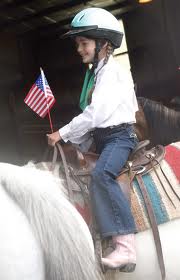
Are children and horses paying the consequences of our lost freedoms?
Horses are one of the few species that bridge the companion and livestock world. Because of this, I think slaughter is especially emotional for people. After all, you wouldn’t want Fido sent to a slaughterhouse, so it just doesn’t seem right to send a horse that direction. I understand that thinking. But the consequences of horses not being sent to slaughter is even crueler. Horses are being dumped, starved and living deplorable conditions. As feed prices reach record highs, these problems are getting worse. If you don’t believe me, take a look at this 60-page report from the Government Accountability Office.
Have we lost the freedom to the right thing for animals in this case? Federal funding was cut for inspectors at horse slaughter plants, at the bequest of animal rights activists. And while it may be sad to think about, horses reach the end of their productive life. Their owners need a humane option for slaughter – and we seemingly have given up that freedom. Horses are ultimately suffering the consequence.
If you want to see people who care for and respect their animals, find a 4-H member. CNN recently ran an article Does 4-H desensitize kids to killing?, which managed to offend many 4-H alumni that never showed an animal. The piece garnered a tremendous number of comments, including mine below.
If anything, 4-H teaches exactly what humans should have; a healthy respect for animals and the life cycle. I was in 4-H for 10 years and have served as a volunteer dairy leader for nearly 15. We are in the unique position that very few of our 4-Hers come from a farm; many are from suburban areas. I could cite the lessons of work ethic, responsibility and confidence that comes from young people in 4-H animal projects. But out of respect for your post, I’ll point to the fact that 4-Hers learn how to honor the ultimate sacrifice animals pay so that we can eat as humans. 4-Hers are taught about animal care, sound nutrition and where our food originates – the farm. There are few other programs that can give children these experiences – and honestly, I wish more would be exposed so they didn’t buy into the misinformation raging rampant about food.
Beyond the obvious insult to anyone who has had the pleasure of showing animals in 4-H, I question why the author is bashing a great youth organization when there are so many problems with children. Do opinions like this threaten our ability to foster leadership through organizations like 4-H and FFA? Are we losing the freedom have young people learn the right way to care for our animals?
The upcoming celebration of Independence Day in the States offers a great opportunity to reflect on these types freedoms that are under attack. What will be the consequences if we don’t protect those freedoms?
10 Comments
Leave a Comment
You must be logged in to post a comment.



You know it is interesting how you sort of leave out the fact that the majority of the ‘caring for animals’ you reference as being taught is in furtherance of the goal of making a profit off of the death of the animal (or some other exploitation of that animal). You should, in the interest of full honesty, always include this fact.
Your phrase: “…honor the ultimate sacrifice animals pay so that we can eat as humans.” is rather misleading. Humans don’t have to eat animals and the animals aren’t “sacrificing” themselves (they have no choice)…they are being killed by humans for humans. The animals are just the victims not “sacrifices”. Euphemisms don’t change that or were you being ‘politically correct’?
As for the fate of horses, why not consider that no one should be caring for a horse unless they are committed to caring for the horse throughout his or her natural lifespan. Living beings aren’t toys nor are they objects (even if they are treated as such). Choosing to take on the responsibility of providing for another living being becomes grotesque when there is an escape clause providing for killing that living being when someone tires of caring for them.
Once upon a time, humans thought it was ok to “own” other humans. We seem to have grown beyond that…now it is time to grow beyond the notion that any living being can “own” another living being. Growing up is a painful and difficult process…but a necessary one.
The tail is most definatley wagging the dog. The horse most found on the slaughter trucks are QH’s under age 3 and 8 years old with suspensery injuries.
Does that sound like a freedom to choose slaughter problem because of hardship to you ?
It is a freedom to abuse problem. To name one – the QH breed registry, #1 breed on slaughter trucks boasts registries of over 150,000 a year.
Not the right color, no proble. ride em hard and put em away wet – no problem, run them to the ground -because you can’t ride (injuries are problematic to some ranches)
whatever scenario the issue is man made and not a natural market.
It is not freedom to slaughter horses you seek but freedom to dimish value of both horse life and people life. Horse slaughter is never a viable business opportunity. It is a no win for anyone.
I’ve never owned a horse but frequently visited a friend who had a few and had dairy cows myself. The horse owners I know all do their best to care for their horses and horse owners are often known for putting a lot of time and care into their animals. They do their best to help them live a full life but things do sometimes happen such as injuries where the most humane thing is to not let the animal suffer anymore. Slaughter appears to be the best way to.do this.
I’d completely agree win the point about 4-h and actually the majority of the horse owners I know were 4-hers and they were very caring towards their horses. I raised rabbits in 4-hthe and it taught me far more skills than simply how to care for an animal.
Unlike humane euthanasia and rendering or burial, horse slaughter is not humane. It also implies use of the product to feed someone.
I raise cattle, but I don’t have the automatic right to send them to slaughter when they reach the end of their productive life. If a cow or bull breaks a leg, they must be euthanized and rendered because one qualification for cattle slaughter is that they must walk. Another is that certain drug protocols must be followed from birth. Food safety is a very serious issue in the livestock business.
Horses are not raised for food in this country. Food safety protocols are not followed from birth. The decision that a horse will become food is usually not made until the animal becomes useless as a performer. Often this is preceded by a period where the animal is on drugs trying to improve it’s performance.
When slaughter of horses was available in this country horse owners didn’t sell horses directly to slaughter. They sold at an auction where a kill buyer would buy the horse. The horse owner was never aware of, or responsible for requirements that had to be met before the horse could be slaughtered for food.
The EU is the main market for horse meat. In Europe horses have a document they call a passport, that follows them from birth, and has all treatments recorded. Health conscious Europeans are becoming more concerned about drug residue in meat and are tightening the laws as to what animals are eligible for slaughter. At the same time they are discovering that Americans don’t keep a life long record on their horse’s treatments.
By mid 2013 horses will not be eligible for EU horse meat unless they have a life long drug record. The two year period before this law becomes effective is to allow people breeding horses for meat to start keeping the proper records on horses that will be slaughtered in the future. They don’t want our old used up performance horses for supper. They are trusting us to provide affidavits on horses that have followed the proper protocols, but have not been recording them as they go along.
American horses going to slaughter today, get bought by a kill buyer and sent to slaughter out of country. That kill buyer is fabricating documentation on the horses drug history if it is not available. Many times affidavits are left at the front desk of the auction barn and anyone selling a horse is asked to sign one so the horse can be sold. So we are actually sending a counterfeit product to Europe for food.
Does anyone remember the uproar in this country when counterfeit products from China caused death in this country? Anyone remember poison baby formula, or poison dog food containing a counterfeit ingredient from China? Do we want out country to have the same kind of reputation when it comes to another countries food supply?
You have the right to raise horses as meat animals and send them to slaughter, but that is not the right being asking for. Proponents of horse slaughter are asking for the right to get paid as if they were selling a food animal, when clearly they are not.
As a cattle producer I follow many protocols designed to produce a good eating experience. I am very careful about every ingredient my cattle eat, and every medication and treatment they receive. I use breeding stock that has been DNA tested and proven more likely to produce more tender and flavorful meat. I study what it takes to put the best steak on the dinner plate.
If horse breeders were as careful in producing performance horses, they wouldn’t have to breed such an excess in hopes of finding a great one. If they want to produce meat horses they have a sharp learning curve ahead of them.
Slaughter is food production. It is a serious, tightly regulated business. It is not the place we send unwanted cows, swine, sheep, and horses.
DianaB- Thank you for stating the facts about livestock production so clearly. Americans do not want unsafe food. I enjoy eating beef- however I am very selective about where it comes from. Based on your approach, I would not hesitate to buy your product. You clearly get it. The food production business is not a dumping ground for unwanted animals. Sadly, the author of this article does not. He is so focused on losing his “rights” that he seems oblivious to fact that the horses not raised to be human food contains chemicals that do NOT belong in any food chain. To the author- this is not about YOUR rights. It is about keeping the food supply safe.
There’s no doubt that the end of regulated slaughter in the U.S. has increased horse suffering. Some hard facts from the GAO report:
-From 2006 through 2010, Canadian and Mexican horse imports increased by 148 percent and 660 percent, respectively. Horses intended for slaughter today travel an average of 753 miles—an increase of 203 miles from when domestic slaughter was in place.
– GAO asked 17 state veterinarians whether horse welfare, in general, had improved, declined, or remained about the same in their states over the last 5 years. EVERY official reported that horse welfare had generally declined. Top two factors that they cited as contributing to the decline in horse welfare: the cessation of domestic slaughter in 2007 and the economic downturn.
-These officials said horse rescue operations in their states are at, or near, maximum capacity, with some taking on more horses than they can properly care for since 2007.
-Data from Colorado showed a 50- percent increase in investigations for horse abuse and neglect from 1,067 in 2005 to 1,588 in 2009.
As an owner and producer of the American Quarter Horse – I’d disagree with both positions. Although you have a point to see this from your end of the spectrum – let’s look at it from mine. I have raised horses for over 30 years, put great care & thought into breeding a product that the public enjoys and can care for. I think the true argument here is my loss of freedom to care for personal property. I believe that an animal does not have the same rights as a human. Animals were placed on earth for man to be a steward of not to become subservient to. I consider the welfare of our horses to be of utmost importance. However, the loss of horse harvesting has left our industry decimated and the welfare of the horse in far worse condition than being locally hauled to slaughter. How is it better for the horse to be hauled in crowded trucks for 20 + hours to Canada for slaughter or worse yet to the deplorable conditions in Mexico? This is better care, more humane …I think NOT!!
I want to reiterate that my freedom has been stripped away from me as a producer. I lose a tremendous amount of money when a horse is sold for harvest. The loss of potential is one thing, but the amount of time and effort I have put into the animal is the greatest loss. I agonize over the decision to end a horses life.
This problem is so much larger than just a back yard horse owner. Have you considered the wild horses in New Mexico and other states and what this has done to those herds? Because slaughter isn’t a viable option, those horses are put in feed lots and cared for with your tax dollars. Grasslands can only sustain a limited number of animals. Numbers have to be maintained or the grasslands are damaged and lost. How are feedlots better for a wild horse??
We are allowing our freedom of choice to be dictated by a few who have no understanding of the consequences. Those few have no comprehension of the depth of the issue and do not consider the rights of the human beings involved; the producers, the ranchers, the showmen, the cowboy. Why should our choices or right to chose mean less than any one else.
First the belief that man was put on this earth to be a steward of animals is a religious belief and one which many do not subscribe to. But being a good steward means being responsible and insuring that the animals are well taken care and provided a good death, euthanasia. The GAO report offered a third option and that was to ban slaughter and the transport of horses for slaughter completely. No I agree, there must be something else in place, perhaps instead of subsidising the breeding registries and large breeders, we put that money into gelding and euthanasia funds, hay banks in each statem system put into place that if a horse owner should fall on hard times, then they have a support system.
Let’s be realistic though, it’s not my responsibility or the governments responsibility to insure that you continue to make a living from a particular business. Free trade means that based upon changing times, both economically, morally and ethically, certain business practices fall out of favor. As one above post mentioned, slavery used to be an acceptable business. Many people made fortunes off of the trade of human flesh. However, there comes a time in a society’s evolution that people have to make a choice on the side of the morally right path.
That time has come, we no longer live in a period wherethe majority of peoples livelihoods depend upon horses, instead our relationship with the horse has evolved to one of companions. The majority of the horses owned in this country belong to people who view them as companions. They may on the weekends attend shows, they may hit the trails, but they are not attempting to make a living off of their horses.
There will always be a need for good breeders, who breed for quality horses but in small numbers, our children will still be able to grow up knowing horses as just as my grandson, will know and love horses. One has nothing to do with the other.
A nation is judged by the way it treats it’s animals, we cannot allow greed to dictate our humanity.
[…] the original post here: Are we losing our freedom? – Cause Matters […]
[…] https://causematters.com/advocacy/horse-slaughter-freedom/ Share this:TwitterFacebookLike this:LikeBe the first to like this post. Categories Uncategorized […]