Are confined spaces cruel for farm animals?




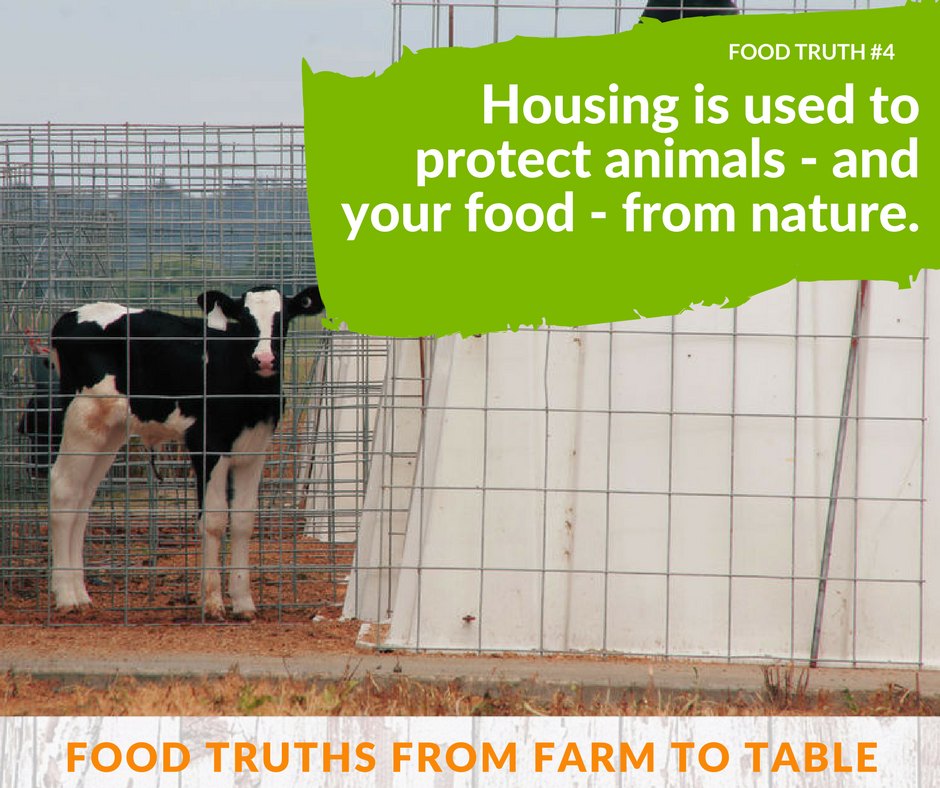
There are many ways to house dairy cattle. Some operations will keep their cows out on pasture, like my neighbors, so the cows aren’t in the barn a lot during the summer and fall. However, even those cows are in the barn for shelter during weather, to eat their specially mixed ration (a nutritionally balanced feed mix) and to get milked.
“Dairy cows being abused” is an increasingly common headline. It’s important to remember context, which is tough to do if you have not been on a dairy farm. For example you may find it disgusting to sleep in a bed of sand, but cows love it. What may be cruel for your dog is not necessarily so for a cow.
Since cows wear their leather coats every day, they can handle a lot of cold, but protecting their udders is a priority. It’s important in the cold is a priority to dairy farmers who live in harsh winters. Those who live in a more arid area are concerned with keeping the udders clean during times of high rain, when it’s muddy.
Shelter for milking cows is really important because their teats (each cow has an udder with four teats hanging down) can get frostbitten or damaged in the mud. Frostbitten teats can be permanently damaged, leading to more mastitis (an infection which is hard on the cow and expensive to treat). Mastitis is most commonly treated with antibiotics, but the milk is withheld, so it does not enter the food supply.
Likewise, providing shade for cattle not housed in barns in extreme heat is important. Dairies will have shades so that their cattle can better handle the heat. Clean drinking water is always important, but especially critical during periods of high heat. Cows are also monitored for panting; many dairies have overhead sprinklers to keep their cattle cooler.
Some dairy farmers put cattle out on pasture a good part of the year. New Zealand is known for that because of their climate, but it’s also done in the U.S. These operations require a lot of pasture management, have reduced feed costs and typically a lower milk production. And most farms today have a metal barn with closed doors – not to hide anything, but to protect their animals biosecurity. These metal barns, while not as pretty as the old wooden barns of yesteryear, are a significant improvement in cow comfort and biosecurity because animals are protected from the elements and diseases from other species.
The view from my office is Holsteins out on grass. It is beautiful, but there are different ways to keep cows happy in both confined spaces and green places. Why does a dairy farmer choose one way over the other? They choose what works for their family, cattle and resources. The critical factor is being sure the cows are managed well, which includes keeping a close on cow comfort, health, nutrition, etc. from the time they are babies.
The good news for you is that the milk in the store is the same quality of milk whether it’s from a small operation milking 80 cows in a pasture using robots or a large family farm with 5,000 cows milked in a rotary parlor.
Read more at Food Truths from Farm to Table to arm yourself with 25 truths you urgently need to know about food so you can shop without guilt, confusion, or judgment. A new book, Food Bullying, releases November 5 to upend the way you think about eating choices.