

Making Science Sexy




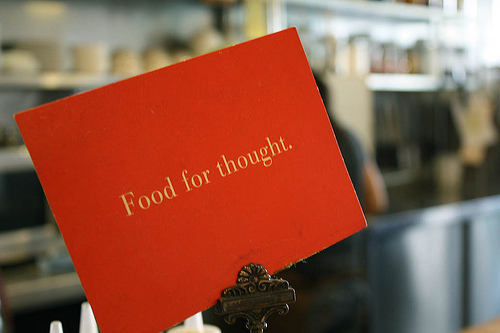
How are you connecting with people around the plate?
Now that I have your attention, we’ll spend the next three paragraphs discussing the merits of the USDA’s decades-long research on the efficacy of comprehensive nutrient management plans (CNMP), BMP and how it is encouraged by NRCS. That’s not exactly effective, unless you’re a farmer looking into how to manage manure to add organic material to your soil. Not of great interest unless you’re working with farm animals. Since this is less than 1.5% of the U.S. population, I might suggest we find a way to amp up agriculture’s sex appeal.
Before I get a mountain of spam and emails related to using the “s” word, let me suggest this: agriculture needs to appeal to the masses by speaking their language rather than stay in our acronym riddled world. It is true that food producers use technology and environmental practices that allow us to have more food from less land. It’s also true that organic matter is applied to fields to help the soil, reduce dependence on foreign oil and be the final link in nature’s recycling plan.
If we can’t translate the science of agriculture and food to a language that can be understood by others, we lose the opportunity to connect. The greater the disconnect, the greater the divide between farm gate and consumer plate. Wired Magazine recently covered the need for science to do a better job of relating to people. “Scientists feel the facts should speak for themselves. they’re not wrong, they’re just not realistic.” The article points to getting people to answer “What’s in it for me?” or “How does it affect my daily life?”
I’ve spent the last week writing about farmers for the non-farm community and trying to make sense of the science of agriculture as it relates to. It’s tough to learn another language. I learned this in Italy when I interned there. It was so difficult for me to learn another language I that nearly failed my Italian class at Michigan State – with a tutor’s help. I was in Italy for two weeks and was fluent enough to get along. Why?
Most say it was due to immersion. That likely helped, but the truth is that cows taught me Italian. I went to several dairy farms and desperately wanted to “talk cows” with the farmers. So, I learned Italian by way of hock angle, rolling herd average, predicted transmitting ability and other cow terms. I was motivated since I could connect the language to something that was meaningful. Rest assured, my Italian wasn’t perfect – I accidentally told the people at my good-bye dinner that they have mothers who are really good prostitutes and enjoy high quality hay. That was certainly memorable!
While my language obviously wasn’t perfect, they deeply appreciated the effort. The same is true when agriculture translates our science into a language others can understand. Consider these key elements:
- Are you motivated?
- How can you connect with what’s meaningful?
- What makes you memorable?
Take the risk to learn a new language – you might be surprised with how it allows you to connect on completely different level than “speaking ag.” And who knows, you might just find out that science can have some appeal.
Hungry for more? Related posts:
Earning the Right to Educate
Changing the Earth with Every Bite
Can an Organic Farm be Modern
4 Comments
Leave a Comment
You must be logged in to post a comment.


You’ve got me thinking Michelle! (Just like you caught my attention with the title!) Thanks for the great article!
Glad to hear the post was thought-provoking.
Great food for thought, Michele. Relevant to your first three paragraphs, lots of undercurrent now that could have a significant effect on agriculture. One need only look at EPA’s proposed rule on Chesapeake Bay TMDLs to see evidence.
The first shot across the bow will be toward agriculture in which there’s a contract relationship between farmers and corporate agri-business. Don’t believe it will end there. Under the current strategy, eventually _everyone_ who land applies organic or chemical nutrients will be affected.
Farmers need not only to have a voice–they need to use it effectively. As you say, they need to translate into a language understood by many.
The work you are doing and that of the AgChat Foundation is a great start. As those involved in agriculture learn to effectively utilize social media channels to get their side of the story told, they’ll also move into other channels, including mainstream media–all the while learning to speak the language better.
Thanks for your comments, Ed. I’d agree that ag folks need to take off their own blinders and look at the big picture. Farms of all makes and sizes are facing unheard of regulations – and must stand up so that the remainder of the population understands the impact this will have on our food supply. “Standing up” can be on screen, Facebook or with your local elected official. This need points to the critical need for all of us in the agrifood business to learn the language of others.