Will you be part of creating a better food story?




Our lives are comprised of many overlapping stories, big and small. You get to choose what stories matter most in your life, but beware of how a single story can limit your thinking. Nigerian novelist Chimamanda Adichie discovered this after she was welcomed by her American college roommate with pity and expectations that Adichie would love tribal music and be unable to speak English or even use a stove. The roommate had clearly developed a stereotype of Adichie based on very limited information about African history and culture.
Adichie’s Ted Talk, “The danger of a single story,” is a powerful example of how we often judge others based on a single story when, in fact, she had more similarities to than differences with her college roommate. Adichie talked about how impressionable and vulnerable we are in the face of a story—and how believing a single story takes away the possibility of building human connections. She suggests we “reject a single story” while also providing examples of single stories leading to false assumptions and even disconnect.
The same is true with food. When you believe a single story, it becomes the only story. You stereotype food and farming based on very limited information. You reject the opportunity to understand new stories and leave yourself open to bullying.
As Adichie also wrote, “Power is the ability not just to tell the story of another person, but to make it the definitive story of that person.” What is the power of the food story you choose to believe?
A farm girl’s story grows
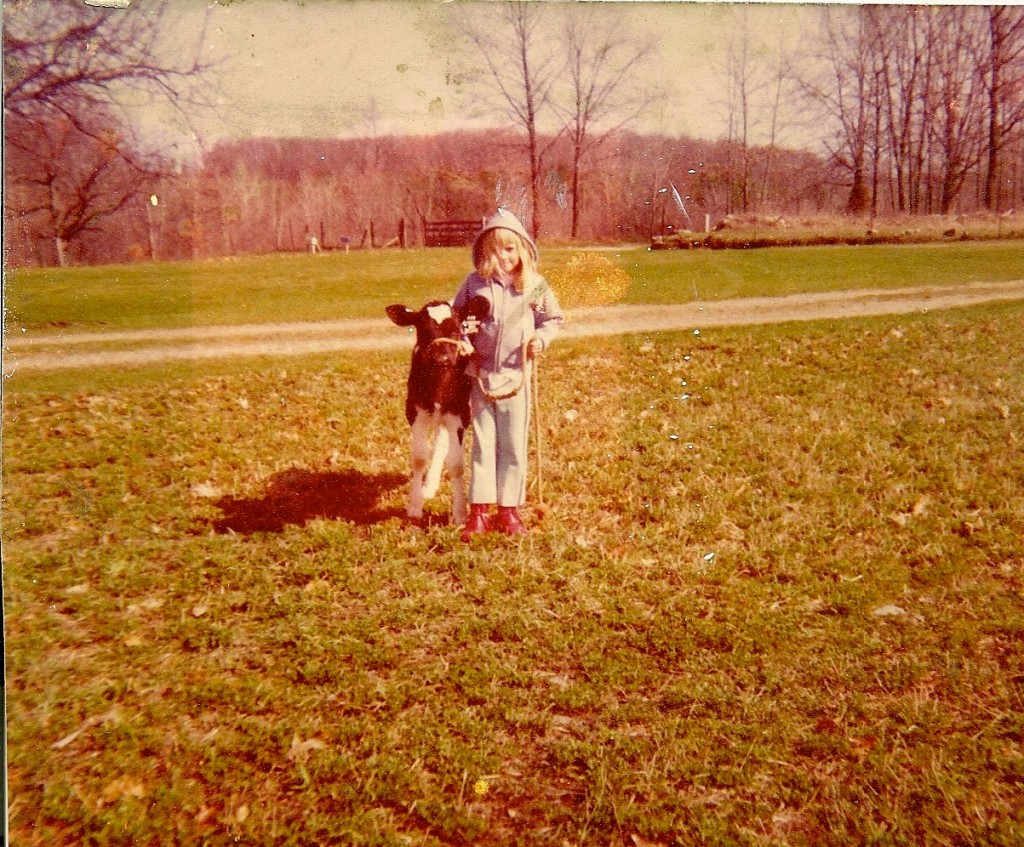
I grew up thinking that food had only one story—and that was the story found on the magical place known as our family farm, with pretty black and white cattle as the center of my universe. My story involved working 365 days a year with my family caring for those creatures, learning tough lessons in entrepreneurship, perseverance, compassion, and work ethic. I am thankful to be able to raise my daughter on a farm so she, too, can learn these lessons.
When I started my career, the world literally opened up while I worked internationally. I discovered the power of other cultures’ stories and the vast food needs of a world outside of America. My story again diversified when I began speaking and writing to help people understand where food comes from. As I started working with people around the food plate, I realized my belief in a single story, forged during childhood, had limited my perspective and connections.
A few years later, when I became a mom, I questioned the story I had always thought to be true about food because I was so worried about making the “right” choice for my family. I found mothers with vastly different opinions than mine, books which informed me that I should only purchase one kind of food, and more ‘mom judgment’ than I had ever imagined. My early parenting experiences not only deepened my understanding about food, but caused me to research and determine my own standards for food. Those standards, continually evolving and adapting as I learn more about the science, source, and system of our food, have served as a solid guidepost on the chaotic playground of food marketing.
But I must say that writing Food Bullying has added more depth to the story than I would have imagined. Listening to a formerly homeless woman share her struggles in finding affordable food for her toddler, researching the many effects of false food labels, interviewing neuroscientists, and researching psychology brought mind-stretching dimensions. Pulling together the research for Food Bullying helped solidify the reality that we so often believe only one story about food—and become uncomfortable when encountering stories different than our own. Over time, we define our nutrition and, sometimes ourselves, by that one story. Yet, food done well is an amazing synthesis of both ingredients and stories.
Find the real stories and ingredients
The ingredients of food are likely more well-known than the real stories of how food is grown. The stories of people who care for animals in the middle of the night, the stories of a little girl who stands in her father’s shadow hoping to someday take over decisions for land her great-grandpa once farmed, the stories of families who risk millions of dollars to produce food for a society who often questions them. I would ask that you consider the authentic stories of how your food is raised as a fundamental part of creating your own food story.
Like everyone, I don’t have all the answers, but I do believe the experts consulted and evidence provided in Food Bullying include the ingredients of a recipe for creating a better food story to stop bullying. I realize you may have never heard of food bullying before I started writing about it. It’s a new concept, but one of the most challenging trends in food, nutrition, and farming today. Rest assured, the food bullying playground will become larger and more chaotic if we don’t address the issue head-on. Now.
If we can stop bullying, we have the opportunity to return food to its rightful place of celebration. I challenge you to find a broader, deeper story for yourself and stop the judgment around food. My hope is that the tools and ideas found in Food Bullying help you understand how you’ve been manipulated in your eating choices, the importance of stopping the B.S., and what you can do about it, beginning TODAY.*
This excerpt from Food Bullying may be printed with attribution to the book title and author Michele Payn. Food Bullying was released November 5, 2019.