A love of playing in the soil




Meet Tyson Roberts, a vegetable grower just outside of Salt Lake City, Utah – a man who wears many hats and a man who is committed to the land that has been in his family for 150 years. When I asked why he farms, he quickly responds: “it’s a relationship with the land, with the soil. It’s how I was raised and how I want my kids to be raised. It’s a family thing.”
The farm raises sweet corn, potatoes, popcorn, garlic, sweet potatoes onions, cucumbers, peppers, tomatoes – he likes to say his farm grows “anything you need for salsa.”
Their business is a great example of how all of us owe our existence to soil – and the nutrition that comes forth when water is added to the earth.
Crop rotation is critical for soil management when growing vegetables. Some crops, like tomatoes, use a lot of nutrients, so rotation protects the soil from having too many nutrients taken up by plants. It’s also logical to rotate because certain types of ground is not suited to grow different crops. If you plant a product in the wrong soil type, it leaves it susceptible to different diseases, increases pressure from weeds and you’ll end up spending a whole lot more on inputs (the products to provide nutrients or combat diseases).
In other words, farmers growing crops need to be soil scientists. It’s especially true for those planting a variety of crops like vegetables; the farmer has to know their soil type and what they are planting. Soil can change dramatically in half a mile. Some ground is sandier, some is heavier. Potatoes and tomatoes are in the same family so they can’t be planted annually right after each other. Research is required to know which rotations (the order crops are planted in) result in more problems with diseases in the plants.
Soil testing is done in the spring before planting and again in the fall so farmers can compare what winter does with the soil. Some fields require nitrogen, but the amount, timing and application differ based upon crop, soil and time of year. The soil in the other fields require potassium and phosphate, which is plowed into the root zone. Yet another specific area may require iron. Soil health has a lot of moving pieces to put together.
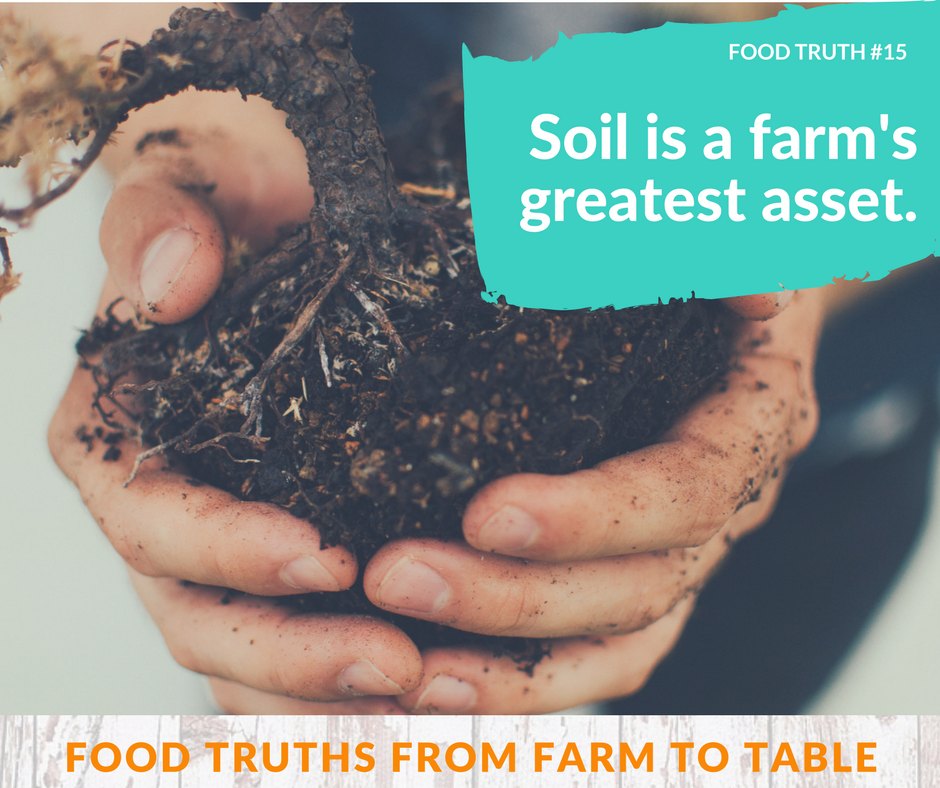
Healthy soil grows more food. Healthy soil requires fewer inputs. Healthy soil preserves generations of farmers. Healthy soil requires less water. Healthy soil just makes sense for farmers.
Farmers apply a lot of science and expertise to caring for their land to raise food. Nurturing the soil is key to their existence – and ours. That is true whether the farmer has 50 acres in Utah or 5,000 acres in Arizona. Healthy soil grows healthy food for you.
Read more at Food Truths from Farm to Table to arm yourself with 25 truths you urgently need to know about food so you can shop without guilt, confusion, or judgment. A new book, Food Bullying, releases November 5 to upend the way you think about eating choices.