Healthy soil grows healthy plants for better baking




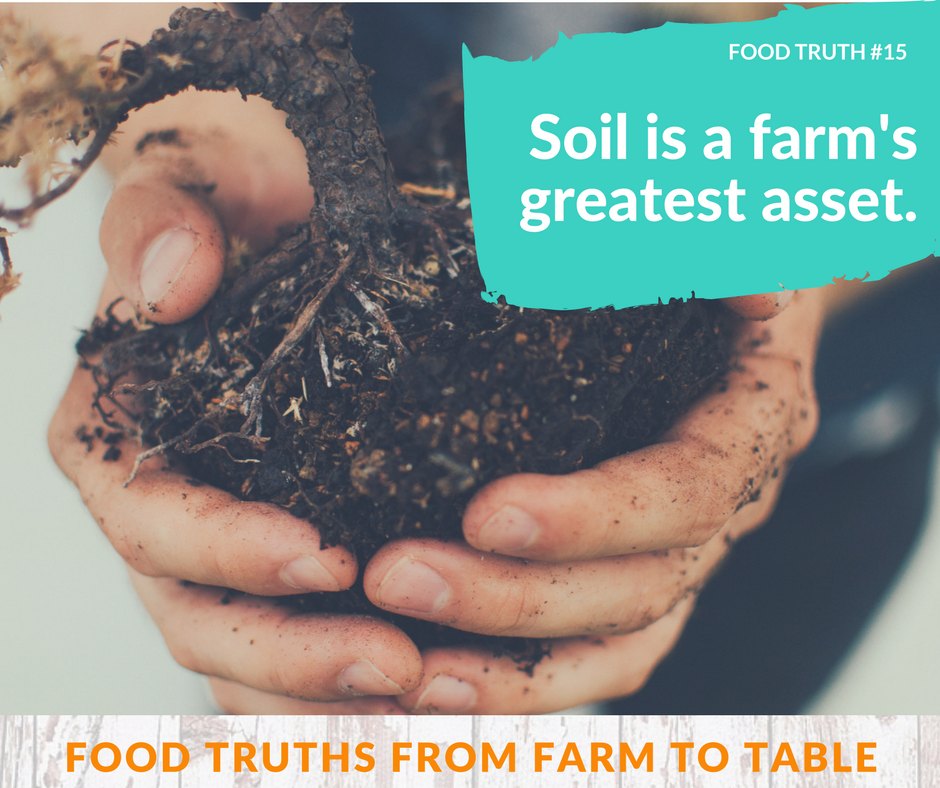
Do you know what stores 10 percent of the world’s carbon dioxide? Soil. Soil is a carbon sink that stores more carbon dioxide than the terrestrial vegetation and the atmosphere combined. When soil is disturbed, carbon dioxide is released into the environment and contributes to global warming.
Soil is the foundation of food. It is the key to great baking. Are you thinking you don’t want dirt in your kitchen? Soil isn’t dirt – it’s essential to healthy plants that make up flour, sugar, corn meal, etc.
Sadly, an area about the size of Costa Rica of topsoil is lost each year. It can take more than 500 years to form two centimeters of topsoil, which is the good stuff that crops grow in. Nearly 50,000 square kilometers of topsoil is lost each year due to water and wind erosion.
That’s a huge loss – one which farmers take very seriously as they grow food for your baking aisle.
The Mississippi River carves out beautiful green hills and woodlands in western Wisconsin. East of LaCross, a pretty historic town a couple of hours southeast of Minneapolis, is where Kevin Hoyer farms around 500 acres of soybeans, corn, and pasture with his wife Jody – who also works in dairy foods quality testing.
Healthy water matters to the Hoyers; their farm has a trout steam on it, so they want to be sure the water can continue to support that. They use buffer strips (portions of land not planted with a crop) to provide more space between their field and the stream. Kevin said they have changed practices from the past as they have learned what hurts the environment as agronomy continues to advance; they are getting rid of insecticides and limiting things that can leach into water.
“We take conservation seriously. It’s not flat here,” Kevin says about this unglaciated area of Wisconsin. “We live and work in this environment, so we want to take care of it.”
Soil health has improved on Kevin’s farm because he’s changed how he works with the land –known as tillage practices. He uses no-till and minimal till to return soil tilth – the physical condition of soil (measured by soil particles, moisture content, aeration, drainage, etc.). No-till has become a common practice for many row crop farmers. No till (or minimal till) just means the land is not plowed, disked or disturbed prior to planting to increase organic matter.
Kevin, like most farmers, judges soil nutrition based upon results from soil testing. He also has started planting cover crops to reduce erosion and help with nutrients in the soil. He points to less need for insecticides due to GMO seeds and integrated pest management as reasons for the improvement in soil health.
Kevin says as he talks about how he plans crop rotation field-by-field before planting. “The explosion of technology over the last decade has overshadowed the basics of agronomy. Farmers produce as much product with as minimal negative environmental impacts.”
Read more at Food Truths from Farm to Table to arm yourself with 25 truths you urgently need to know about food so you can shop without guilt, confusion, or judgment. A new book, Food Bullying, releases November 5 to upend the way you think about eating choices.