Food Bullying Podcast

Cutting through nutrition science noise: Episode 128




 Nutrition requires evidence, not emotion – a PhD nutritionist makes the case
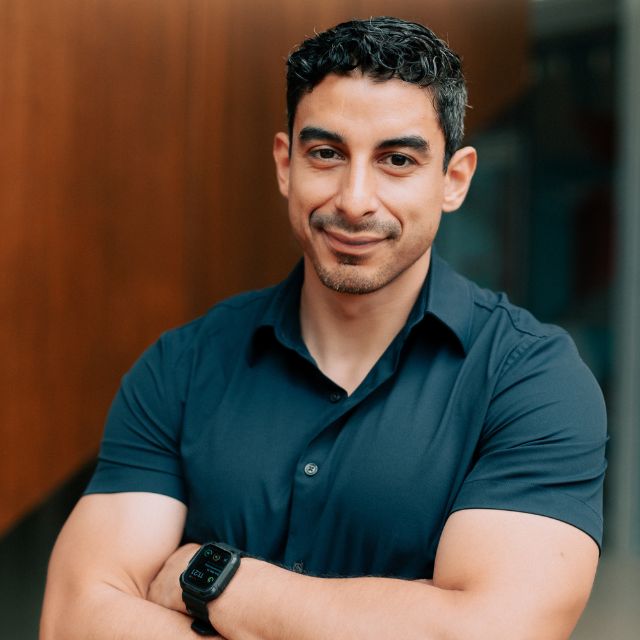
Dr. Adrian Chavez doesn’t have a stake in agriculture. He’s not a farmer, not an agribusiness advocate, and not someone whose livelihood depends on defending how food is grown. He’s a nutrition scientist with a PhD in nutrition and health promotion from Arizona State University, host of the Nutrition Science Podcast, and someone who has guided thousands of patients through evidence-based nutrition programs addressing high cholesterol, diabetes, autoimmune disease, IBS, and IBD.
He also used to be afraid of seed oils, shopped exclusively organic, went gluten-free, dairy-free, and through nearly every other food restriction that fear-based nutrition content promotes.
Then he read the research. And his conclusion – delivered directly and without apology – is that most of what drives food anxiety in America has no meaningful scientific support. The foods people are avoiding are safe. The things they’re ignoring are the ones that actually matter.
That perspective, from someone with no agricultural axe to grind, is worth hearing. Here’s what Dr. Chavez told the Food Bullying Podcast.
How to evaluate a nutrition claim: the hierarchy that matters
Before getting into specific foods, Dr. Chavez lays out the framework that should govern how any nutrition claim is assessed – and it’s the same standard dietitians use, explained in terms anyone can apply.
Randomized controlled trials (RCTs): The gold standard. People are fed a specific food and researchers measure what actually happens to their health. LDL cholesterol, HbA1c, inflammatory markers, body composition – real outcomes in real people.
Prospective cohort studies: Large groups of people are tracked over 20, 30, even 50 years, with researchers monitoring what they eat and what health outcomes emerge. These can’t establish causation with the precision of an RCT, but they’re essential for identifying long-term patterns that short trials can’t capture.
Cell culture and animal studies: Useful for generating hypotheses, not for making dietary recommendations. When someone explains a mechanism – what happens inside a cell when exposed to a substance – that tells you something interesting might be worth investigating. It does not tell you what happens when a human being eats that food. The gap between those two things is where most nutrition misinformation lives.
The warning sign Dr. Chavez flags: communicators who pile on technical terminology to sound authoritative while describing mechanisms, not outcomes. The more jargon, the more skeptical you should be. Genuine expertise translates to simplicity, not complexity.
Are seed oils dangerous? What the evidence actually shows
Seed oils are one of the most fear-mongered topics in nutrition right now, and Dr. Chavez traces the myth to a real – but misapplied – piece of science.
Omega-6 fatty acids, which are abundant in seed oils, can create a pro-inflammatory environment in isolated cell studies. That’s technically accurate. And that’s exactly where the accuracy ends.
When people are actually fed seed oils in randomized controlled trials and researchers measure what happens, the results are consistently positive: lower LDL cholesterol, no increase in inflammatory markers, no increase in fat mass. The claim that seed oils cause obesity relies on a correlation – seed oil consumption and obesity rates both rose over the past 60 years – that applies equally to computer use, screen time, and dozens of other lifestyle changes over the same period. Correlation without causation is not evidence.
The RCT evidence on seed oils shows positive health outcomes. That’s the answer.
Pesticide fearmongering is keeping people from eating vegetables
This is the argument Dr. Chavez makes that has the most direct relevance for farmers and agricultural communicators: the Environmental Working Group’s Dirty Dozen list and similar pesticide fearmongering content is causing people to eat fewer fruits and vegetables.
He’s seen it in his own comments. People tell him they stopped eating blueberries and strawberries after encountering content about pesticide residues. Some can’t afford organic and simply stop buying those foods. Others believe pesticide residues are harmful even on organic produce and avoid produce altogether.
The research doesn’t support any of this. Every large-scale study on fruit and vegetable consumption finds consistent, significant positive health outcomes – lower cancer risk, lower heart disease risk, longer life expectancy. None of those studies selected exclusively for organic produce. And one study Dr. Chavez references found a positive correlation between pesticide intake and health outcomes – not because pesticides are beneficial, but because people who consumed more pesticides were eating more fruits and vegetables, and the health benefits of that produce vastly outweighed any effect from trace residue levels.
The pesticide residues on conventional produce are at quantities that don’t come close to canceling the health benefits of the food itself. People who stop eating strawberries over pesticide concerns are making themselves less healthy, not more.
For farmers watching their crops be demonized by influencer content that isn’t grounded in evidence, Dr. Chavez’s message is validating – and practically useful for how those conversations can be reframed.
The dietary guidelines aren’t killing us – ignoring them is
Dr. Chavez has a pointed quote that circulates on social media: “The dietary guidelines are killing us because no one’s following them.” His point is the opposite of the usual critique.
The data on adherence to the U.S. dietary guidelines consistently shows that people who follow them have lower rates of cancer, heart disease, and early death. The problem is that the average American consumes less than one serving of fresh fruit per day, and barely more than one serving of vegetables – and roughly half of that vegetable count comes from ketchup and potatoes.
Five or more servings of fruits and vegetables daily is associated with a 20 to 30% reduction in cancer and heart disease risk in the research literature. Americans are nowhere near that. And two groups, in particular, are making it worse: carnivore and extreme animal-based diet advocates who actively discourage produce consumption, and the fitness industry, which tends to deprioritize fruits and vegetables because they don’t fit macro targets or support body composition aesthetics. Neither group is optimizing for long-term health.
The dietary guidelines, Dr. Chavez argues, are actually just good basic nutrition advice – and telling people to go read them directly, rather than trusting a filtered interpretation, is worth doing.
How agricultural communicators can change minds
Dr. Chavez’s one request of farmers – the thing he flagged on the podcast – is to show up on social media and show what actually happens on a farm. Not defensively, not with data sheets, but by letting people see the reality.
He specifically points to reaction-style content as particularly effective: taking a claim being made about “factory farming” or pesticide use and responding to it directly with footage or explanation from the farm itself. The format works because it captures the attention of people who are already primed to believe the negative claim, then redirects them toward an accurate picture.
His own journey followed exactly that path. It wasn’t counter-arguments that changed his mind about agriculture and food – it was visiting farms and seeing the other side of it. The content strategy that mirrors that experience is what he thinks can bridge the gap at scale.
How a reformed food-fear PhD shops for groceries
Dr. Chavez is candid about his own history: during his PhD program, he was strictly non-GMO, organic-only, clean eating, gluten-free, and dairy-free. He’d been through essentially every food restriction driven by fear-based content.
Today he pays attention to sodium because it affects his blood pressure. He ignores organic labels, non-GMO labels, and the rest of the marketing scaffolding built around food anxiety. He describes the shift as genuinely freeing – it allowed him to focus on the things that the evidence shows actually matter: adequate protein, sufficient fruit and vegetable intake, a reasonable awareness of caloric balance, and consistent eating patterns.
Most of the patients he works with, he notes, are spending enormous mental energy avoiding seed oils and seeking organic produce while having no idea how much protein they’re eating, consistently skipping breakfast and overeating at night, and wondering why their energy and health aren’t where they want them to be. The fearmongering is a distraction from the basics. The basics are what work.
Connect with Dr. Adrian Chavez: Find him on Instagram, visit his website at dradrianchavez.com, and subscribe to the Nutrition Science Podcast.
Want to bring evidence-based science communication to your next agricultural or dietitian event? Michele Payn speaks to agricultural organizations, agribusinesses, and dietitian associations on food bullying, consumer trust, and navigating nutrition noise. Book Michele to speak →