Water is the lifeblood of a sustainable family business




Three generations working side-by-side to bring in harvest. Identical twin daughters. Long days of staring at little red berries, followed by short nights. Energy, patience, stamina and passion are needed to bring in this tangy holiday tradition.
Fall harvest in Massachusetts is a beautiful combination of crimson color on this cranberry farm and colorful foliage, bringing joy to the long days, according to Dawn Gates, who farms with her family.
And it’s a life Dawn Gate-Allen wouldn’t trade for anything. She’s a working mom, but her office involves tall boots and a lot of water. And solar-powered sensors talk to her laptop – wherever it might be. Those sensors make sure the cranberries don’t get beyond 105 degrees in their bogs and have enough moisture. Wouldn’t that be handy for your plants?
The next time you drink a cranberry juice, enjoy a handful of craisins or cook with cranberries, consider this; your cranberries have to float to be harvested. And there’s a whole lot of focus on the environment to get them to that point.
They myth of agriculture not prioritizing sustainability is unrealistic. To infer farmers and ranchers are not invested in sustainability reflects a lack of firsthand familiarity with today’s food production practices.
Protecting the environment is top priority for cranberry farmers. Dawn and her husband have invested hundreds of thousands of dollars in conservation upgrades including pop-up sprinklers, automated irrigation and new water control flumes. Solar energy gives constant battery power to the automated irrigation receivers, saving 15 percent in fuel annually.
Water is literally the lifeblood and recycled throughout the bog system. Water provides frost protection in spring fall, protects root zones during the harshest winter months and is essential to harvest.
“It’s a privilege to be a farmer and take care of our land.” That care is such a concern that they use food grade oils in the harvesting equipment because if something does happen, they have equipment to contain and cleanup the spill. Maybe oil companies could learn something from this cranberry-growing family?
Moving to the opposite side of the country; there are few places in the U.S. that have been challenged by environmentalists like California. Van Groningen and Sons started farming there in 1922 with a dairy farm, moved to row crops and today are known for melons, sweet corn, gourds, pumpkins and almonds. I visited Ryan Van Groningen, fourth generation on the farm, about how they preserve water.
“We do not recycle water, but we do preserve water. All of our fields and ranches use drip irrigation, which considerably lowers the amount of water a crop uses. We must make decisions on what will grow, depending on water availability. At times, growers will need to fallow prime farmland because they do not have enough water to provide for all of the acreage, if planted.”
Having lived in California a few years, I can attest to the very real concern of water there. It’s a critical factor in the business of growing fruit and vegetables, many of which come from the west coast. Van Groningen & Sons farms around 5,000 acres where they grow our melons, sweet corn, pumpkins and nuts. It sounds like huge business, but seven family member owners maintain an active daily role, along with 50 full-time employees.
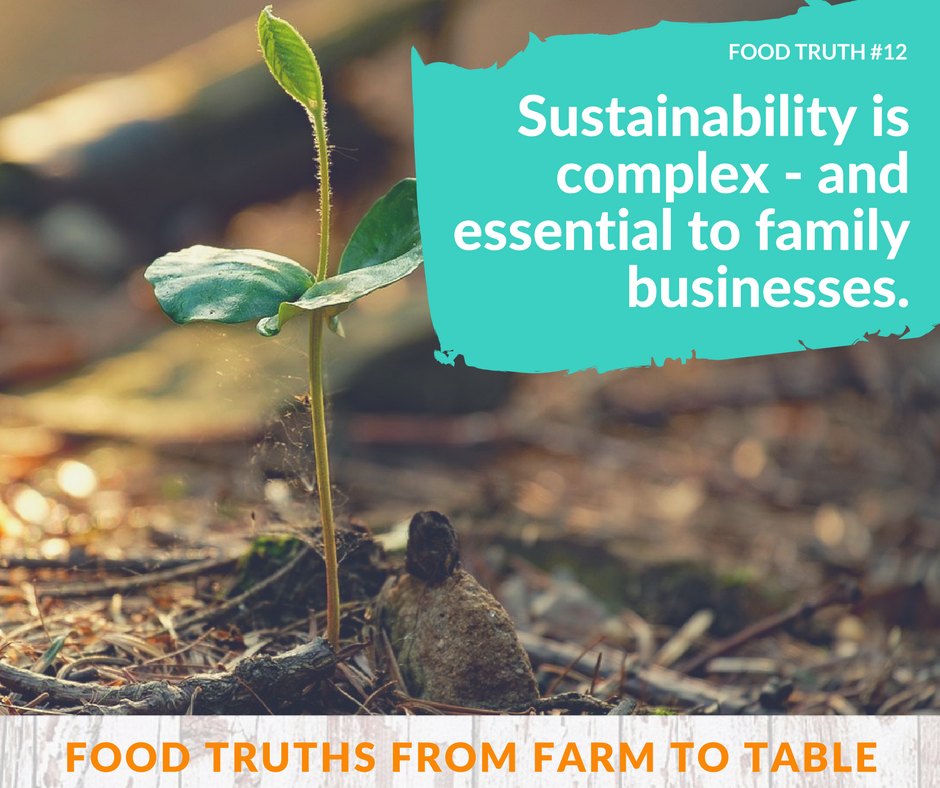
Water is the lifeblood of both of these family farms, large and small, west coast and east coast. Sustainability is a driving business concern to farmers and ranchers – and since their families are involved with the land and water on a daily basis, it’s personal. Protecting their business for future generations is also a part of the sustainability model.
Read more at Food Truths from Farm to Table to arm yourself with 25 truths you urgently need to know about food so you can shop without guilt, confusion, or judgment. A new book, Food Bullying, releases November 5 to upend the way you think about eating choices.