Genetics improve your groceries




Did you know that beef cattle have been bred to have less fat in the meat? And dairy cattle genetics allow for higher protein milk, while chickens and turkeys have larger breasts because of genetic selection? And messing with genes gave you seedless grapes and seedless watermelons? And there is rice genetically modified to provide Vitamin A to help prevent 500,000 cases of blindness and up to two millions deaths each year? And…the list goes on.
Granted, I may be unusual since I once wanted to study dairy genetics, but I don’t know how you can be interested in food and not be fascinated by genes. All food begins from a plant or animal and NO food remains untouched by genetics (regardless of any label claim).
When did all of this “genetic manipulation” start? Plants and animals have been selectively bred for centuries to amplify desirable traits while minimizing less desirable ones. The first genetically modified crop was 8,000 years ago, designed by nature with bacteria in soil as the engineers. Scientists at the International Potato Center in Lima, Peru found genes from Agrobacterium in 291 sweet potato varieties, including ones grown in the U.S., Indonesia, China, parts of South America and Africa. In other words, genes were transferred from bacteria to sweet potatoes in evolutionary times.
This is technically called transgenics (the transfer of genetics), which sounds a bit nicer than genetically modified organism. I hear from other moms “I’m not so sure about feeding my child anything genetically modified – it sounds a little freaky. And then when I see pictures of fruit with syringes in it, yikes!”
Here’s what you need to know: no one is sticking a plant, ear of corn, or fruit with a syringe – or crossing them with frogs, but actually conducting revolutionary science that will someday help humans solve diseases like cancer. History shows genetic modification, gene editing, transgenics, hybridization, gene silencing and newer breeding techniques have proven benefits.
- increased consumer convenience: seedless fruits & apples/potatoes that don’t brown
- more affordable food: more production per acre or animal decreases costs
- greater medical options: today’s insulin is direct result of transgenics
- better nutrition with leaner, higher protein: lower fat meats, higher protein milk
- solutions to malnutrition: Vitamin A in rice, research on other foods like sorghum
- improved opportunity for small-scale farmers: drought resistant, hardier crops and animals
- reduced carbon emissions: fewer passes through the field, higher production
- decreased use of insecticides: corn, eggplants & others resistant to bugs don’t need sprayed
- improved animal welfare: selection for disposition, calving ease and polled
- greater preservation of biodiversity: less land required with higher production
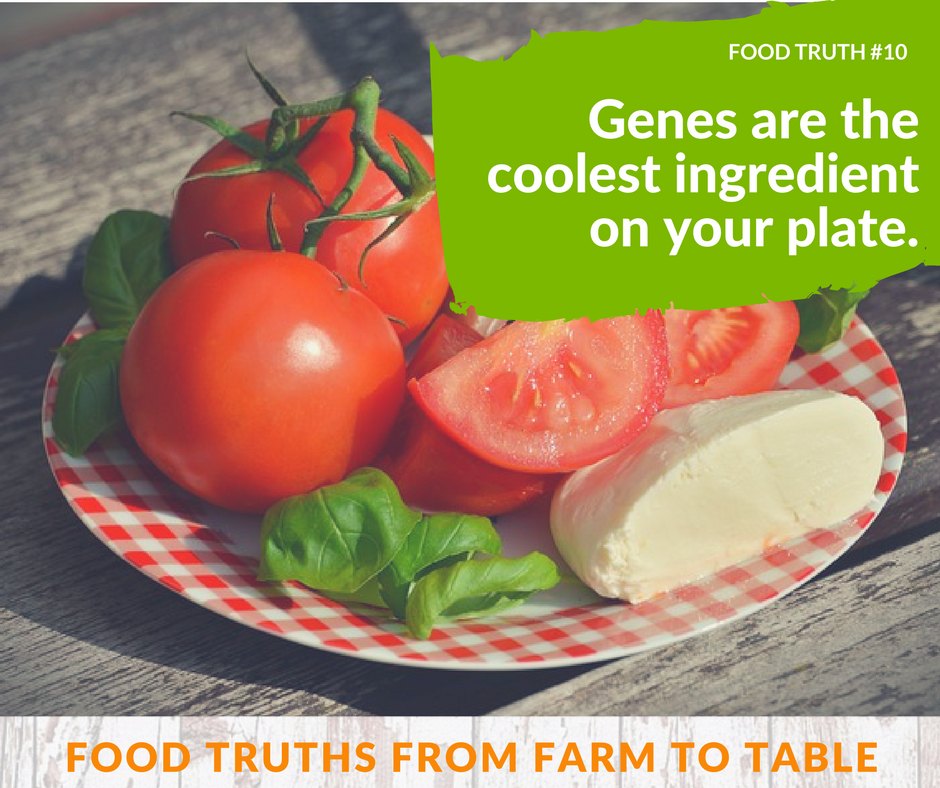
When you stand in the fast food line for some chicken or enjoy a salad from the deli, you may not be thinking about genetics. However, a whole lot of DNA is on your plate so don’t let it freak you out. Then when you hear about gene editing, transgenics and even genetic modifications – consider the possibilities of better health, food and nutrition.
Read more at Food Truths from Farm to Table to arm yourself with 25 truths you urgently need to know about food so you can shop without guilt, confusion, or judgment. A new book, Food Bullying, releases November 5 to upend the way you think about eating choices.