
Making knowledge matter: why agriculture's communication problem is not what you think
By Michele Payn, CSP | causematters.com
You have the knowledge. You have spent years – possibly decades – building it. You know what the science actually says about GMOs, pesticides, antibiotic use, animal welfare, soil health. You have stood in fields, driven tractors, reviewed research, counseled patients. You know things that most of the people talking loudest about food have never taken the time to truly learn.
And it is not working.
Not because the knowledge is wrong. Because knowledge that stays inside an expert's head is inert. It does not change what a parent believes in the grocery store. It does not correct the viral video that got three million views in three hours It does not reach the lawmaker who is about to vote on policy that affects every farm in your state. Knowledge only matters when it moves – and it moves through connection, not data transfer.
That is the real communication problem in agriculture. Not a shortage of expertise. A failure to close the distance between what the people in agriculture know and the people who need to know it.
I have spent 25 years bridging the gap from farm gate to food plate – writing four books, hosting 140 podcast episodes, working with experts in 25 countries, founding the #AgChat and #FoodChat communities that helped start the agvocacy movement in 2009. The thing I keep coming back to, the thing I say on every stage: data dumping and defensiveness does not work.
The goal is for your knowledge to land somewhere, change something, or matter to someone who did not already agree with you. Connection through human story is how you close the gap between what you know and what they are willing to hear.
“In a world where machines can know everything, leadership is the human art of making knowledge matter."
Why the gap exists – and why it keeps getting wider
Two-thirds of Americans live in cities. Most have never visited a working farm. They form their understanding of food production from what they read, watch, and hear – which means they are largely getting it from people who have never farmed either.
That alone would be manageable if the information environment were neutral. It is not. There is a $6+ trillion global food industry built on the premise that some food is dramatically superior to other food – which requires making the rest seem frightening. Fear-based food marketing is not a side effect; it is a deliberate and profitable strategy to push emotional thinking. And the people spreading fear about farming are routinely better at making knowledge matter than the people who actually have firsthand knowledge.
Dennis Dimick, then Executive Editor for Environment at National Geographic, grew up on a farm in Oregon. When I interviewed him, he named the disconnect plainly: we are an urban society now, with little understanding of what farmers do, how they live, or the enormous risks they take. His advice to farmers was direct: you can't afford not to open up and become a self-advocate. That was an outside-agriculture voice confirming what I have seen from inside for 25 years.
Years ago,, I watched 100 Wisconsin dairy farmers show up when Michael Pollan was paid $25,000 to speak about In Defense of Food at the University of Wisconsin. They were not there to protest. They were there to talk – to show the press who they were, to represent the farms Pollan had left out of his narrative. They got coverage. He adjusted his remarks. And when a panelist described how farming advancements help care for animals and land, Pollan responded that this was quite a story.
Farming is not a story. It is a family's livelihood, part of the fabric that comprises their soul, and a business contributing to communities.
Showing up anyway is the whole game; the gap does not close itself.
Five ways agricultural communications doesn't connect
After working with farmers, scientists, ranchers, and food professionals across six continents, the same patterns come up. These are the five I see most often in the disconnect between farm and food.
1. Opening with data instead of connection
The first instinct when someone questions your farming practices is to correct them. To cite the study. To explain the regulatory process. To tell them what they have wrong.
It almost never works.
Milton Stokes, Senior Director of Food and Nutrition at the International Food Information Council, has tracked consumer trust for 19 years. His finding is consistent: leading with facts does not build trust with skeptical audiences. Leading with listening does. Your data earns its place in the conversation only after the person on the other side believes you understand what they actually care about.
Science Story Speak names this the connection point – the shared value or hot button you identify before you introduce the evidence. Safety for their children. A clean water supply. Economic sustainability for farming families. These are not rhetorical techniques. They are real points of agreement between almost every farmer and consumer, even when they seem to disagree about everything else. Start with commonalities and human connection. Your knowledge follows as evidence for something you both want.
2. Treating defensiveness as a legitimate response
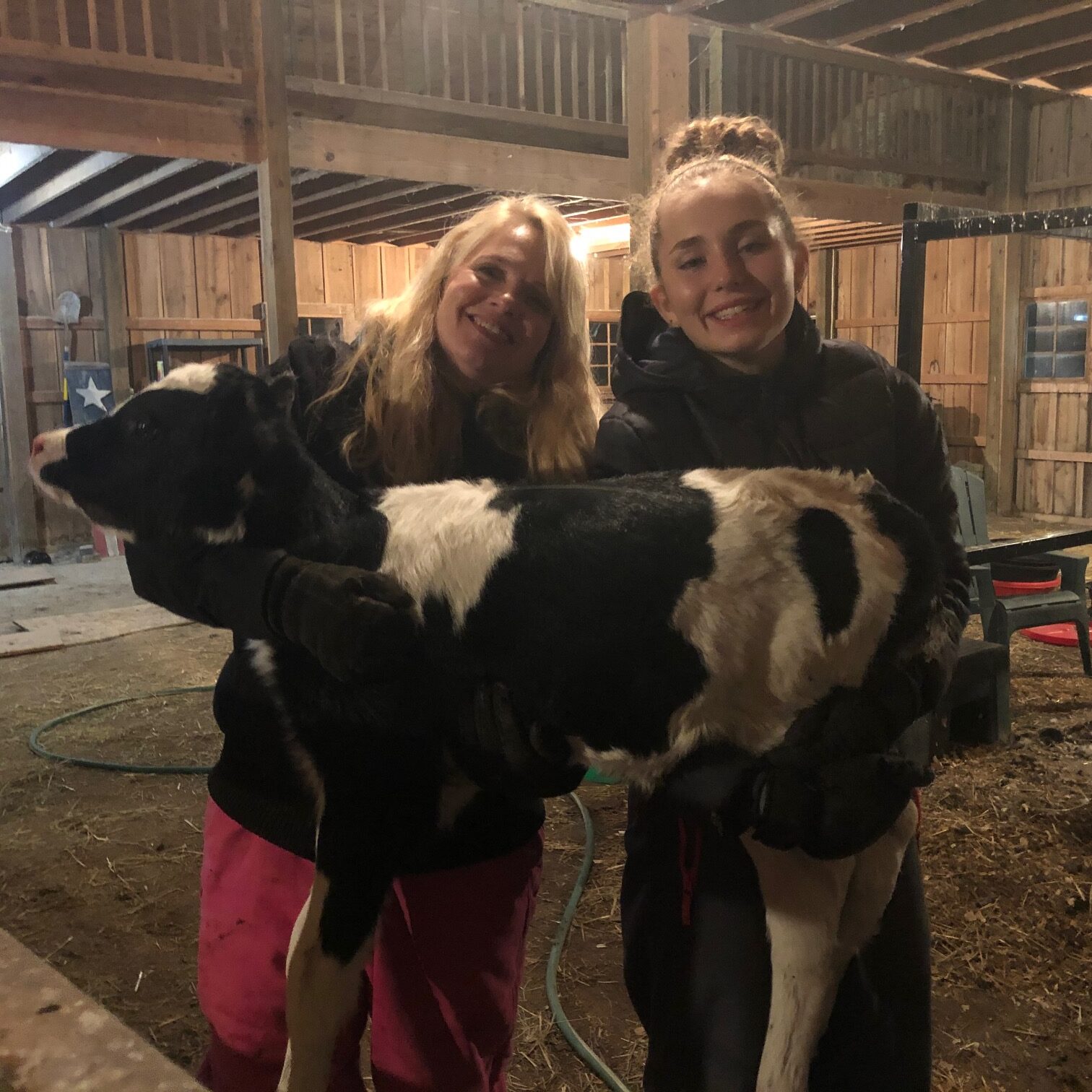
Farming is personal. Families are wrapped up in it around the clock, often across generations. When someone questions your practices, it genuinely feels like a personal attack. I grew up in a barn – I understand that.
But defensiveness reads as guilt to someone who is not already on your side. It confirms the narrative that agriculture has something to hide. It ends conversations before they start.
The public is agriculture's stockholders. When farmers fail to help their stockholders understand the business, build their trust, and respond thoughtfully to their questions – the business suffers. The Wisconsin farmers changed what happened in that room because they showed up without defensiveness, as human beings first. Others have done the same online and in person.
That is not a communications strategy.Showing up as humans the only approach that actually works.
3. Keeping secrets that create speculation
Agricultural culture has a long tradition of modesty and humility – it's not common to talk about how much ground you farm, what you pay in rent, how many animals you run. There are legitimate competitive reasons for some of that privacy. But the cost rarely gets calculated.
A farmer's spouse once wrote on this site about discovering the unspoken rules of farming after marrying into an operation. She made a point that cuts through: if we won't tell our friends how much ground we farm, how can someone we don't know trust us about the safety of food, feed, fuel, and fiber products
Secrecy invites speculation. The National Geographic editor's advice was blunt: if you have something to hide, maybe you need to clean up your practices. If you don't, be open about it.
The information vacuum agriculture leaves does not stay empty. It fills with whatever story serves someone else's agenda.
4. Talking at people instead of with them
There is a version of agricultural communication that amounts to: here is what you have wrong, and this s the correct information. It's approach appears in farming campaigns, in social media rebuttals, and in carefully crafted messaging that treats the consumer as a problem to be corrected rather than a person worth understanding.
Steve Tucker is a Nebraska farmer who farms regeneratively. On the Food Bullying podcast he offered interesting insight: the elevator is not my consumer. He talks directly to the person eating his food, about what they care about, in language they actually use. The shift in reception is not subtle.
Sharing knowledge isn't rocket science – it is relationships. The communicators who have built durable credibility with non-farm audiences approached those audiences as people worth knowing, not problems to be managed.
5. Waiting to be asked
The conversation about food and farming is happening right now, on every platform, in every comment section, amongst generative A.I. crawlers, and iin every documentary queue. Most of the people driving that conversation have not farmed a day in their lives. Agriculture's knowledge is optional in most of those conversations – it is only present when someone who has firsthand knowledge decides to share their story
The posture is the whole of it. Not follower counts, not coordinated messaging, not egos – just a person who knows something true about food production, deciding to close the distance between that knowledge and the people who need it.
What the science of trust actually tells us
There is a body of research on how people form and change beliefs that complicates the communication instincts that come naturally in agriculture. Understanding it is not academic – it is the most practical tool any agricultural communicator can have.
The connection point precedes the science
People do not change beliefs when they receive new information. They change beliefs when they receive new information from a source they trust, about a topic they already care about, in a way that connects to something they already value. All three conditions have to be present.
The first instinct in food and farming conversations is to lead with the information – residue levels, regulatory timelines, peer-reviewed research on GMO safety. All of it is real and important.
But it lands on ears that are not yet ready to hear it, from a source the listener has not yet decided to trust, about a topic they may already have formed strong feelings about. The knowledge is there. The conditions for it to be received are not.
That is what the connection point solves. Before the evidence, you need a bridge. Find the shared hot button or human connection – the child's safety, the watershed, the farmer's economic survival. Mean it. Then let the science follow as evidence to talk about something you both want. In that sequence, your knowledge begins to matten.
Emotion precedes reason – and that is not a problem to overcome
Neuroscience has documented what communicators have long observed: people make decisions emotionally and justify them rationally. A label that reads hormone-free triggers a fear response before any reasoning about what hormones in food actually means. A documentary that opens with footage of sick animals works through disgust before the conscious mind has a chance to evaluate the evidence. This is how food bullying operates: manufactured emotional response, bypassing critical thinking entirely.
The answer is not to out-manipulate the manipulators. It is to connect on an emotional level with something true.
When I tell the story of standing in a barn giving my dairy cow an IV at midnight, driving her to Purdue's Large Animal Clinic because I could not find what was wrong, crying because I felt so incredibly frustrated – that is emotional content that works because it is real. It does not need to be manufactured. It just needs to be told. And it carries more weight about animal welfare than any study, because it lands in a part of the brain that data cannot reach.
Consistency builds trust – campaigns do not
Agricultural communication campaigns rarely do what one farmer with a camera does naturally. A coordinated messaging effort signals an organization protecting its interests. A farmer sharing his morning chores on a Tuesday – not because there is a crisis but because this is what farming looks like – signals a person with nothing to hide.
IFIC's Food and Health Survey data, tracked across 19 years, is consistent: consumers trust individual farmers more than food companies, more than government agencies, and significantly more than the media. That trust in farming is available. It is chronically underused.
What builds it is not a campaign. It is showing up over time, being honest about the parts of agriculture that are complicated, and helping the family be visible.
Science communication – how expertise becomes influence
There is a specific challenge at the intersection of farming and communication worth naming on its own: the problem of communicating science to a public that has been trained to distrust it.
Science is being questioned and denied like never before. Decisions are increasingly made on emotion rather than evidence – not because people are irrational, but because the information environment is designed to trigger emotion, and the people who understand the science are largely absent from the places where those emotional narratives form.
Dr. Brett Carver is a wheat breeder at Oklahoma State University. When he appeared on the podcast, he described what happened when one misleading book – Wheat Belly – nearly destroyed public trust in wheat overnight. A physician with no background in agronomy published a claim that modern wheat had been fundamentally altered and was making people sick. The science did not support it. The book sold millions of copies anyway. Carver had to rebuild his entire communication strategy around research to counter a narrative that had already spread to millions of people. He was fighting downstream of the story that had already been told without him.
If you are a scientist who knows the research but struggles to communicate it, you are not alone – you are the norm. And the norm needs to change, because the window to shape what people learn about your field is open right now.
The wheat belly dynamic plays out across every domain of agricultural science. The pattern is the same: a fear-based claim with emotional resonance spreads faster than evidence-based correction. Science communicators who wait until the claim is established to respond are always playing catch-up. The knowledge exists. The practice of making it accessible before the misinformation arrives does not.
Three mistakes that keep scientific knowledge from landing
Connie Diekman, former president of the Academy of Nutrition and Dietetics, made a point on the Food Bullying podcast: the problem starts inside professional education itself. Scientists and dietitians are trained to communicate with peers.
The result is science communication that is accurate and unpersuasive – technically correct, emotionally inert, and impossible to share.
- Leading with jargon. Technical language signals expertise to other experts. To everyone else, it signals distance. The parent worried about pesticide residues does not need a toxicology primer. She needs a human being who understands her concern to tell her what the evidence actually says, without condescension.
- Stacking studies. Piling citation on citation does not build trust – it builds cognitive load. The person on the other side stops listening long before the third study. One well-chosen piece of evidence, connected to something the listener already cares about, is more persuasive than ten presented in sequence.
- Ignoring the emotional context. A parent who arrived convinced by a wellness influencer is not in a neutral state. She is frightened. Responding to fear with a recitation of EPA tolerance levels does not address what she is experiencing. Acknowledging her concern first – and meaning it – changes the conversation entirely.
The Science Story Speak framework
Science Story Speak is a 180-page interactive workbook I wrote with Amy Hays/ We built it for anyone who has ever watched eyes glaze over mid-explanation – a farmer at a town hall, a researcher at a public hearing, a dietitian with a client who arrived convinced by a documentary. It is not a book to read once. It is a system to work through every time an important conversation is coming.
The five-unit framework:
Unit 1 – Connecting with audiences. Understanding the diversity of mindsets and worldviews you will encounter – and finding the connection point that works for each one.
Unit 2 – Communicating effectively. The practical mechanics of building credibility and trust in public-facing conversations, including how to address misinformation without escalating defensiveness.
Unit 3 – Improving understanding around farm and food. Specific tools for the most contested issues in agriculture – GMOs, antibiotics, animal welfare, sustainability claims, pesticide safety – with frameworks for making the science accessible without oversimplifying it.
Unit 4 – Normalizing science in decision-making. How to help the people around you use evidence as a tool for everyday choices, rather than treating science as a contested authority.
Unit 5 – Taking action. Chapter 17 brings the full framework into a personalized communication action plan. This is where the tools become a system.
The framework works because it starts with people – where they are, what they believe, what they care about. The science earns its place in the conversation after the connection is made, not before.
Agvocacy and AI – why the stakes are higher than they have ever been
In 2008, the conversation about food and farming was happening online without agriculture in it. Consumers were sharing fears about pesticides and GMOs and factory farms in spaces that farmers had not yet entered. Activists were proliferating false information about farming. The story was being written without the people who knew it.
It's why I founded #AgChat and #FoodChat in 2009 – I wanted agriculture to be in the room where its story was being told. Individual people with real knowledge and genuine care showed up consistently, and the information environment shifted in measurable ways. Not because of a campaign. Because people decided to show up.
The principle behind that movement is unchanged: the conversation is happening whether you in it or not.
What generative AI has changed
The stakes are now significantly higher. Generative AI tools are being trained right now on whatever content is publicly available. When someone types are pesticides in food dangerous into an AI tool, the answer they get is only as good as the content the AI was trained on. Right now, fear-based food marketing content vastly outnumbers credible, science-grounded agricultural content in the publicly available training data. The imbalance is actively shaping what AI tells the next generation of consumers about food and farming.
Jennie Schmidt is both a farmer and a registered dietitian. On the podcast she made the point about policy: misinformation about farming reaches lawmakers unchallenged when agriculture is not in the conversation.
The same dynamic now applies to AI, but at orders of magnitude greater scale. Misinformation and disinformation becomes AI-certified fact when it is the dominant content in the training data. And the AI does not know it is wrong or that real agricultural voices are missing.
The knowledge you have spent a career building is shaping what AI tells the next billion people about food – or it isn't, depending on whether you have published it. That window is open right now.
Authentic, science-grounded agricultural content published today will shape AI responses for years. This is not a hypothetical future concern. It is the present reality of every farmer, scientist, and food professional who has not yet started making their knowledge public.
What this looks like in practice – by audience
Farmers: Your first obligation is to talk like a human being to those outside our business. When you share what your morning looks like – the animals you care for, the decisions you make, the science behind your practices – you give the people eating your food something no brand campaign can replicate: a real person whose knowledge they can trust. You do not need a communications degree. You need to close the distance between what you know and the person who needs to know it. Start today, on whatever platform your audience is already using.
Scientists and researchers: The research is not enough on its own. Amy Hays, who co-authored Science Story Speak, has spent 25 years at the intersection of ecology, agriculture, and conservation. Her consistent observation: science communicators underestimate how much worldview shapes what people are willing to hear. Before you present your findings, understand who is in the room. Find the connection point. Let the science follow as evidence for something you both want. Your knowledge is the substance. Connection is what makes it move.
Dietitans and health professionals: Your clients arrive already shaped by documentaries, Snapchat, A.I. and influencers who have every incentive to make food frightening. You are in a position to give them something more valuable than a rebuttal: a framework for evaluating claims on their own. The know the farmer, know the science, know the system approach from Food Bullying is a practical tool for this. People who understand even one of those three are significantly harder to food-bully than people who understand none of them.
Agribusiness and farm organizations:
The people you represent have the most credible possible voice in the food conversation, and that voice is chronically underused. Your most important communication investment is not in a campaign – it is in removing the barriers that keep the people of agriculture from sharing their knowledge directly. Farm tours. Social media confidence-building. Platforms that put real farmers in real conversations with real consumers. A.I. optimization. The organizations that have built lasting trust have done it by getting out of the way of the people whose knowledge was always more powerful than the messaging.
Closing the gap
25 years ago when I started this business I noted II'd be perfectly happy if I talked myself out of a job. That only happens when enough people in agriculture have built enough genuine connections with people outside it that the fear-based narratives stop finding traction.
When the parent in the grocery store already has a relationship with someone who can answer her questions honestly. When the AI a teenager asks about farming has been trained on enough authentic agricultural voices that it gives a science-grounded answer.
We are not there. But we are closer than we were in 2009, because individual people decided their knowledge was worth sharing – not because they were great storytellers, but because they were genuine experts who cared enough to close the distance.
That is the whole of agricultural communication. Not campaigns or coordination or perfectly crafted messaging. A person who knows something true amd decided it matters enough to say it in a way to be meaningful to the person across the food plate.
Your knowledge is already there. The system for making it matter is what this site exists to give you.
Agriculture doesn't need better marketing. It needs more people willing to bridge the gap between what they know and the people who need to know it. That person is you.
About the author
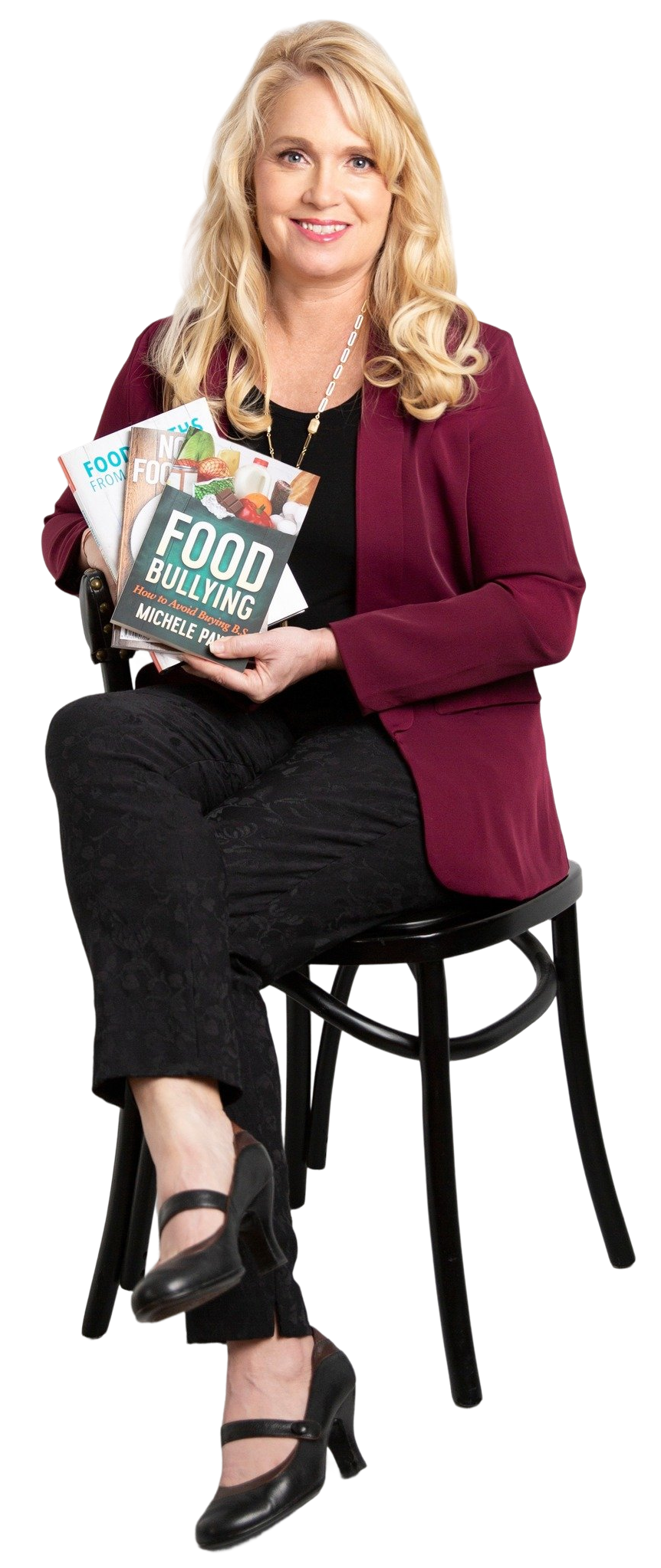
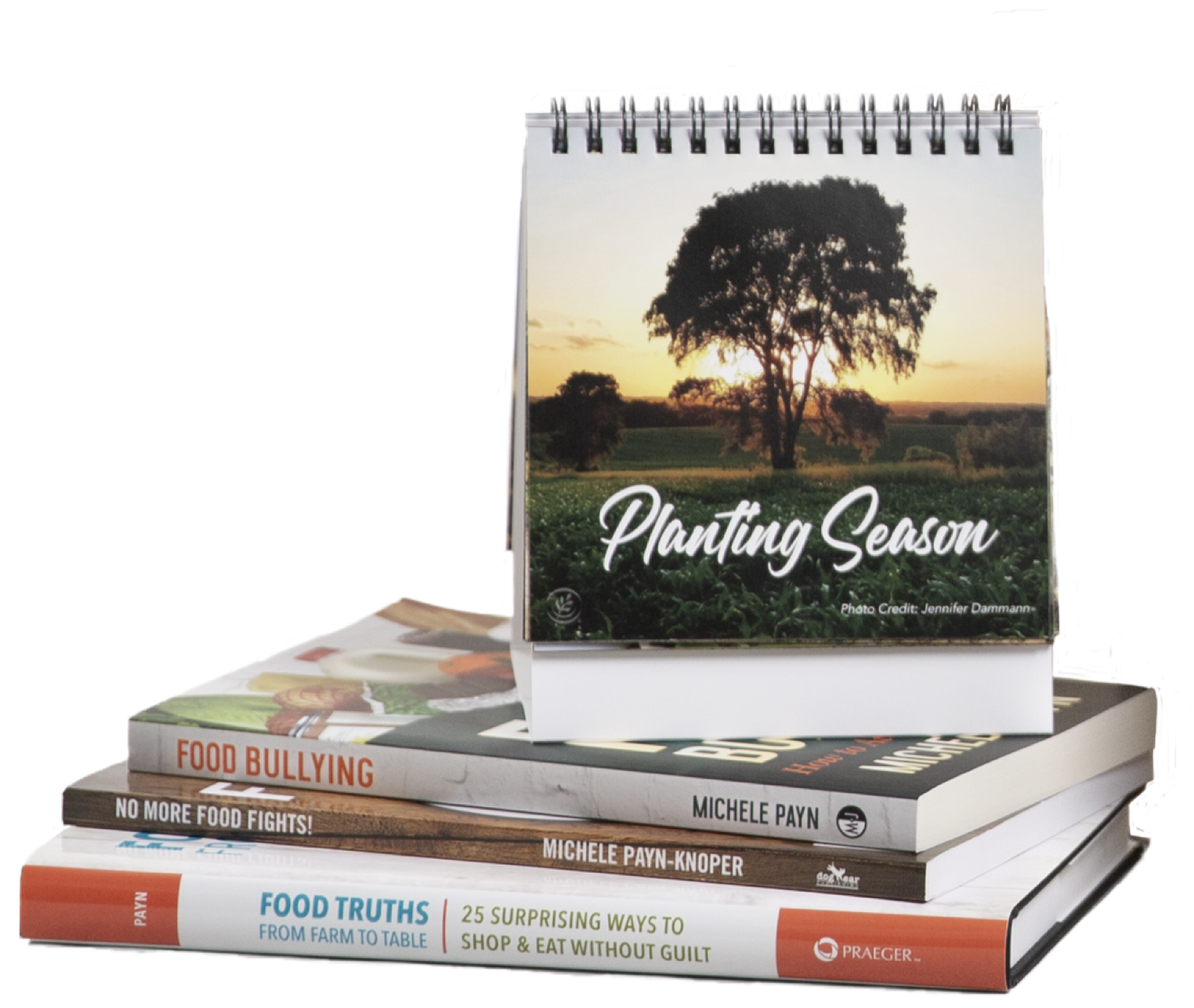
Michele Payn, CSP, is one of North America's leading voices connecting farm and food. She is the author of four books: Science Story Speak (co-authored with Amy Hays), the IPPY Gold Medal-winning Food Bullying: How to Avoid Buying B.S., Food Truths from Farm to Table, and No More Food Fights! She founded #AgChat and #FoodChat in 2009 and has co-hosted 140+ episodes of the Food Bullying podcast. A lifetime Holstein breeder and now conservation farmer in Indiana, Michele has worked with farmers and scientists in 25+ countries and is principal of Cause Matters Corp.