




Stewardship isn't a trend for farmers – it's a legacy
The word "sustainable" is on everything. Shampoo bottles. Airline websites. Chicken sandwiches. It has been stretched so thin by marketing that it barely means anything anymore – and the people who are actually doing the work of sustaining land, water, and soil are getting lost in the noise.

Sustainable Agriculture & Science
The farmer who has been building soil organic matter for 20 years does not need to be told about regenerative agriculture. She is living it. The rancher who manages 10,000 acres of native grass and has never broken it for row crops is not following a trend. He is protecting a legacy. The dairy farmer who put in a methane digester, precision nutrient management, and a constructed wetland does not see himself in the "industrial agriculture" narrative. And he is right.
Sustainable stories is where the real story gets told.
Here you will find what soil health actually is – and why it connects the person eating lunch in a Denver office building to the corn field in Indiana. What regenerative and organic farming practices actually look like in practice, where the science is settled, and where it is still developing. Why farm size has nothing to do with environmental stewardship, but does impact profitability - a key part of sustainability. How precision agriculture and emerging technology are doing things that would have seemed impossible a generation ago. And how to read environmental claims on food packaging with the same clear eye you now bring to nutritional ones.
Michele Payn is not an environmental consultant who learned about farming from a white paper – she grew up on a dairy farm, studied animal science, and has spent a career translating the real work of stewardship for audiences who need straight answers. She also created a wildflower pollinator stewardship program on their Indiana farm, where she and her husband learn about conservation daily.
Michele Payn helps answers sustainability questions about:
- What regenerative agriculture, soil health, and climate-smart farming actually look like on a real farm
- How to read sustainability claims on food packaging with the same eye you bring to nutrition labels
- Why farm size tells you almost nothing about environmental stewardship
- How precision agriculture and emerging technology are changing what farming looks like
These stories are told by farmers, scientists, and conservation professionals doing the actual work – not from behind a marketing desk, but from inside a barn, on the seat of a tractor, or in the middle of a field that has been in one family for a hundred years.
Sustainability is not a label. It is a practice. And the people practicing it have been doing it long before it was profitable to say so.
Stewardship, sustainability, regenerative & precision ag FAQs
Speaking Programs
Every program is customized for your audience – whether you are working with farmers, agribusinesses, ranchers or the next generation of ag leaders. Michele is an agricultural speaker with thought-provoking content and a lot of interaction to keep your audience engaged.
- Rethinking Sustainable Agriculture: Making Sense of Trade-offs from Farm to Fork – Built specifically for audiences tired of buzzwords and blame, this keynote helps farmers, agribusinesses, and dietitians make sense of the environmental, economic, and social trade-offs behind real sustainability decisions – and walk away with the language to lead those conversations confidently.
- Translating Farm to Food: Creating a Different Conversation – Sustainability claims only land when the audience trusts the source. This keynote helps agricultural audiences bridge the gap with consumers on the issues that matter most – animal welfare, GMOs, chemicals, antibiotics, hormones – by translating how food is actually grown into language that resonates. Available for conferences and virtual delivery.
- Celebrating Agriculture! – An uplifting counterweight to fear-based food narratives. This program honors the generational stewardship and everyday work behind modern farming – a strong fit for commodity group conferences and agricultural organization annual events where audiences need to leave energized, not just informed.
- Science Story Speak – The sustainability conversation lives or dies on how well science gets communicated. This workshop equips agricultural professionals and scientists with the tools to move beyond data and connect with audiences on a human level – so the real story of stewardship, soil health, and precision farming gets heard.
- Harvesting AI: Predict Food Trends, Protect Farming's Truth – The sustainability conversation is increasingly being shaped by AI-generated content – and not always accurately. This workshop teaches agricultural communicators to use AI as a trend forecasting tool while protecting agriculture's story from machine-generated misinformation about GMOs, antibiotics, and sustainability claims.
Soil, sustainability, & stewardship podcast episodes
These bring farmers, scientists, and nutrition professionals into the same conversation – because the sustainability story is only credible when the people actually doing the work are the ones telling it.
Ep. 111: Holistic animal agriculture for nutrition pros
Dr. Kim Stackhouse-Lawson delivers peer-reviewed data on greenhouse gas emissions, the biogenic methane cycle, cattle as food waste upcyclers, and the federal funding gap that is slowing sustainability research in animal agriculture.
Ep. 75: Good soil is like chocolate cake
Steve Tucker explains soil health, carbon sequestration, cover crops, and no-till farming through the lens of someone who is farming regeneratively in Nebraska.
Ep. 102: Farm monoculture myths & soil nutrients
Farmer-dietitian Jennie Schmidt defines monoculture accurately, explains why cover crops protect the Chesapeake Bay watershed, and dismantles the assumption that conventional farming is incompatible with environmental stewardship.
Ep. 141: Potato, potahto, vegetable or grain?
Idaho soil scientist and fifth-generation farmer Mitchell Searle explains five-year crop rotation, soil biology, precision input management, and irrigation efficiency – showing that reducing chemical use has been the consistent trend in modern farming.
Ep. 101: Apples, fungi & pheromones
Fifth-generation Michigan apple farmer Nick Schweitzer explains how pheromone technology replaces insecticide applications, how integrated pest management works in practice, and why the dirty dozen list misrepresents what sustainable fruit production actually looks like.
Ep. 109: Health & environment priorities for beef producers
California beef producer Alli Fender explains how her cattle upcycle San Diego brewery waste into high-quality protein, how pasture rotation has restored wildlife biodiversity on her ranch, and why grain-finished beef is not nutritionally inferior to grass-finished.
Ep. 122: A.I. in your food (cattle, not computers)
Utah cattle rancher Brady Blackett explains how artificial insemination allows selection for feed-efficient genetics – reducing land and feed inputs per pound of beef – and addresses the grass-fed superiority claim with practical science.
Ep. 113: Cheesemaking – paving the whey for fine spirits
How one Minnesota farm produces cheese, craft spirits, pure water, and animal feed from a single milking – nothing wasted. Eliminating waste is a foundation of agricultural sustainability on farms and ranches.
Ep. 77: Chemicals and doctors and food, oh my!
Emergency physician and medical toxicologist Dr. Liza Dunn states directly that glyphosate does not cause cancer, explains why pesticides protect public health rather than threaten it, and traces the history from DDT to GMOs through a public health lens that no agricultural advocate can replicate.
Blog posts related to the science of sustainability
Go deeper into the science and the people behind sustainability – written for agricultural organizations, agribusinesses, and dietitians who need more than a headline.
Conventional, Organic & Regenerative Agriculture Explained: The Farm Behind Your Food Ecologist and rangeland scientist Amy Hays – with 25+ years working alongside Texas and Oklahoma farmers – breaks down what conventional, organic, and regenerative farming actually mean for your food and the soil behind it, and why none of the three has a monopoly on good stewardship.
Big bad agriculture: a transparent look at their science & safety A direct, evidence-based defense of agricultural science regulation — one of the strongest science communication posts on the site and the natural anchor for this pillar.
Food with a conscience: humane care and animal welfare Michele's personal dairy farm experience with a sick heifer challenges animal rights narratives with science and firsthand care.
The unspoken rules of farming A candid look at farming's culture of secrecy – and why transparency is a better business strategy in an era of consumer scrutiny. Honest and unexpected, which gives it SEO differentiation.
Michele Payn's Books Bridging Science, Sustainability, and Real Life Farm Stories
Every book Michele Payn has written started with a problem she couldn't ignore. She writes to bridge farm and food with story, science, and heart
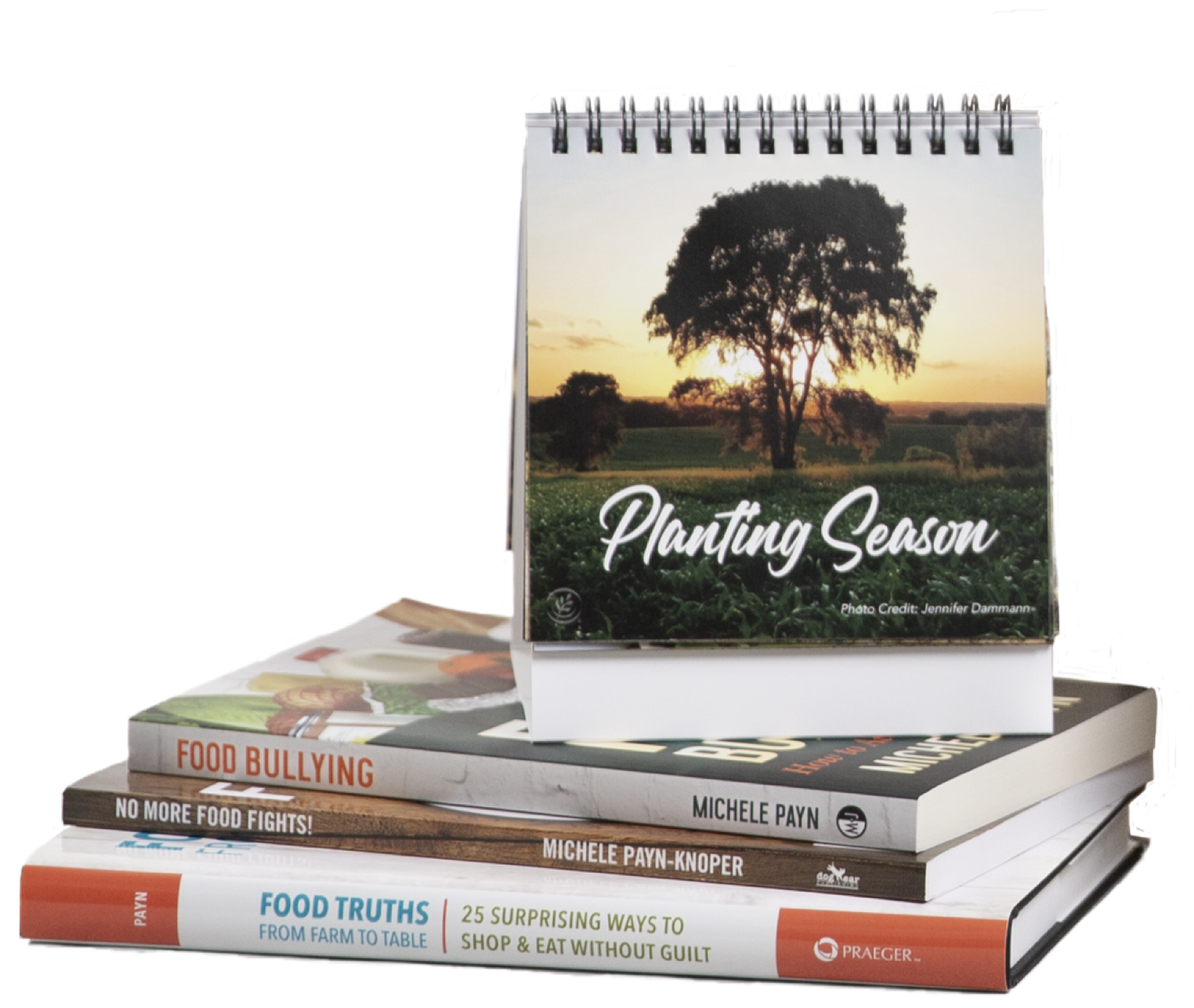
- Science Story Speak 180-page interactive workbook — 40+ exercises across 17 chapters for science-based communicators who want a real system.
- Food Bullying: How to Avoid Buying B.S. An exposé of how labels, brands, and online voices use fear and shame to manipulate food choices. It gives you simple tools to spot bullspeak, ignore bullies, and buy food that fits your own values.
- Food Truths from Farm to Table A myth-busting look at 25 “food truths” that cut through marketing hype and fear-based headlines. It helps you shop and eat with less guilt by pairing real farm stories with clear science.
- No More Food Fights! Bridge-building guide for farmers and food buyers — six senses for consumers, six steps for producers.
About Agriculture Speaker Michele Payn
- Certified Speaking Professional (CSP) – one of 900 in the world
- Author of Food Bullying, No More Food Fights!, Food Truths from Farm to Table, and Science Story Speak
- Grew up on a dairy farm; holds a degree in animal science from Michigan State University
- Host of the Food Bullying Podcast – 120+ episodes bridging farm science and consumer trust
- Worked across 25+ countries with agricultural organizations, agribusinesses, farmers, and dietitian audiences
- Founder of #AgChat and #FoodChat – two of agriculture's earliest and most influential social media communities
- Raised $5M+ for FFA & 4-H through strategic communication and community development
- Developed a wildflower pollinator project alongside her husband on their small farm in central Indiana
Cut through the noise: science-backed farm & food resources

Food Truths and Consumer Trust

Farm to Fork Communication
Sustainable Agriculture and Science