



Is your milk safe to drink?
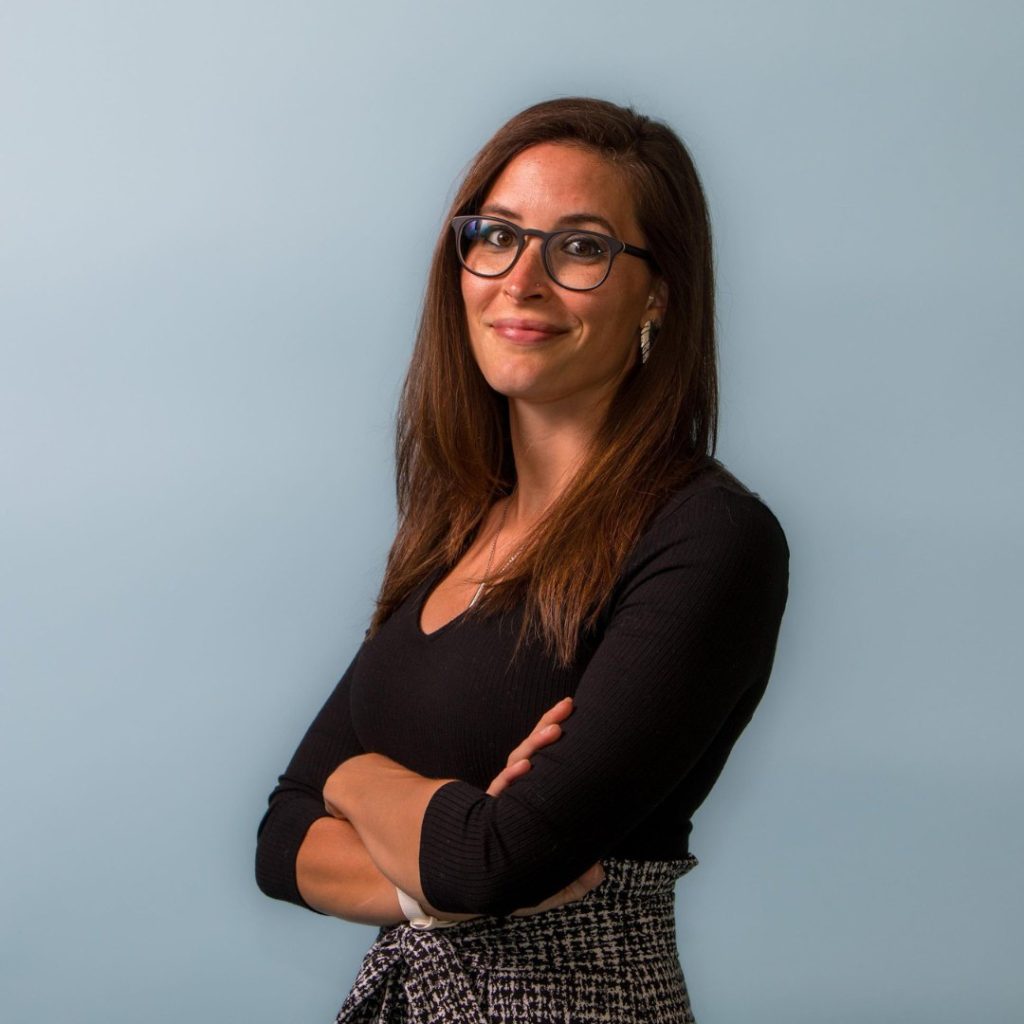 The short answer, according to Dr. Andrea Love, is yes – if it's pasteurized.
The longer answer involves virology, a history lesson on public health, the difference between hazard and risk, and why raw milk is a choice the science simply doesn't support.
Dr. Love is a biomedical scientist and award-winning science communicator with a PhD in microbiology and immunology. She brings over fifteen years of experience in basic sciences, translational medicine, and clinical research to her work as founder of ImmunoLogic – a science education organization dedicated to improving science literacy – and as executive director of the American Lyme Disease Foundation. She joined the Food Bullying Podcast to cut through the noise around dairy safety, bird flu, and the food anxiety that's driving consumers toward some genuinely risky choices.
What bird flu in milk actually means – and what it doesn't
When H5N1 avian influenza fragments were detected in pasteurized milk, headlines did what headlines do. But Dr. Love explains what the testing actually found: not live virus, not intact infectious particles – fragments of viral RNA detected by PCR, the same technology used to test for COVID.
PCR doesn't confirm a virus is alive, able to reproduce, or capable of causing illness. It confirms that genetic material is present. Follow-up studies confirmed those fragments were non-viable. In Dr. Love's analogy: it's like finding crumbs of a cookie. The crumbs aren't a cookie, and once ingested they're broken down by digestive enzymes before they could pose any risk.
Pasteurization – the heat treatment that's been protecting milk since the U.S. passed the Pasteurized Milk Ordinance in 1924 – destroys live viruses by denaturing the proteins they need to survive. Before pasteurization, roughly 25% of disease outbreaks were traced to milk. Today, that number is below 1%.
Hazard vs. risk: the framework everyone needs
Dr. Love uses a shark analogy to explain a distinction that changes how you think about food safety claims.
A hazard is the theoretical possibility of harm if exposure occurs. A risk is the hazard combined with actual exposure. A shark is a hazard. Standing on the beach, you have no risk. Swimming next to a shark changes that.
Applied to dairy: H5N1 in dairy cattle is a hazard. For consumers of pasteurized milk, pasteurization eliminates the exposure pathway entirely. There is no risk – even while the hazard exists somewhere in the supply chain. The FDA and USDA continue to monitor and confirm this through ongoing surveillance.
Why raw milk makes no scientific sense: six reasons
Raw milk advocates often frame their choice as natural, health-forward, or a reaction to institutional distrust. Dr. Love addresses all of it directly.
- Pasteurization doesn't compromise nutritional quality. Heat treatment kills pathogens – it doesn't strip the milk of the nutrients that make it valuable.
- Raw milk can contain live bacteria that pasteurization eliminates – including salmonella, listeria, campylobacter, and E. coli. These are among the leading causes of serious foodborne illness.
- Raw milk can contain live viruses. Unlike pasteurized milk, where only non-viable fragments may appear, raw milk has no kill step for active pathogens including H5N1.
- "Natural" is not a safety standard. Bacteria and viruses are natural. They live in soil, on udders, in grass, and in the environment cows interact with daily. Milk will always contain microorganisms – the question is whether the dangerous ones have been rendered inactive.
- Distrust of regulatory agencies doesn't make raw milk safer. The FDA, USDA, and EPA aren't creating their own data to scare people – organizations like the Environmental Working Group draw from the same USDA surveillance databases, then reframe the numbers. The agencies monitoring dairy safety are staffed by scientists who have devoted careers to food safety. The alternative – no quality control – is what the pre-FDA era actually looked like, including children dying from antifreeze used as a solvent in liquid antibiotics.
- The risk falls disproportionately on the most vulnerable. Children, pregnant women, older adults, and immunocompromised individuals face the highest risk from raw milk pathogens – the same populations for whom dairy's nutritional benefits matter most.
Chemophobia, orthorexia, and the social media feedback loop
Dr. Love identifies a pattern she sees accelerating: chemophobia – an irrational fear of chemicals – intersecting with orthorexia, an unhealthy obsession with eating "correctly." Social media amplifies both because fear-based content spreads faster and further than nuanced science.
Her reframe: everything is a chemical. You are a collection of chemical reactions. Water is a chemical. Even water is toxic at a sufficient dose – the dose makes the poison, and route of exposure matters as much as the substance itself.
The appeal to nature fallacy drives much of this anxiety – the assumption that anything natural is better than anything synthetic. But organic pesticides are still made in laboratories, often by the same companies that make conventional ones, and are less stringently regulated. Studies comparing organic and conventional produce for nutritional value find differences so small as to be clinically irrelevant. The result: consumers spending twice as much for no measurable health benefit, and in some cases eliminating produce from their diets entirely because they can't afford the organic version – losing the very nutrients they were trying to protect.
How a PhD microbiologist shops for food
Conventional produce over organic – she sees no scientific rationale for the premium. Pasteurized everything, always. No interest in the non-GMO Project label, which she describes as fear-mongering that exploits health anxiety. Local when feasible, but not at the expense of safety or budget. Food hygiene – proper storage, washing produce with water – as a consistent habit, not a source of anxiety.
Her bottom line for consumers and dietitians alike: the food supply is the safest it has ever been. The goal isn't perfect, fear-free shopping – it's helping people feel confident enough to actually eat a nutritious, diverse diet without second-guessing every label.
Connect with Dr. Andrea Love: Find her at immunologic.org and on Facebook, Instagram, and Threads at @Dr.AndreaLove, and occasionally on X at @Dr_AndreaLove.
Want to bring evidence-based science communication to your next event? Michele Payn speaks to agricultural organizations, agribusinesses, and dietitian associations on food bullying, consumer trust, and navigating nutrition noise. Book Michele to speak →