





Your clients aren't confused because they're uninformed. They're confused because someone spent millions of dollars making sure they would be. That's food bullying – and it's making your job harder every day.
Registered dietitians and healthcare professionals are on the front lines of a food system flooded with fear-based marketing, misleading label claims, and social media nutrition noise that has nothing to do with science and everything to do with profit. Clients arrive scared of GMOs, antibiotics, and hormones they can't define. They've been told organic is always better, gluten-free is healthier, and that food from conventional farms is dangerous. And they're looking to you for answers – in an environment where the science keeps getting drowned out by the marketing.
Learn more about the food bullying, its impact on clients belief in food, and how neuromarketing impacts our brain.
Why dietitians and food professionals trust Michele Payn
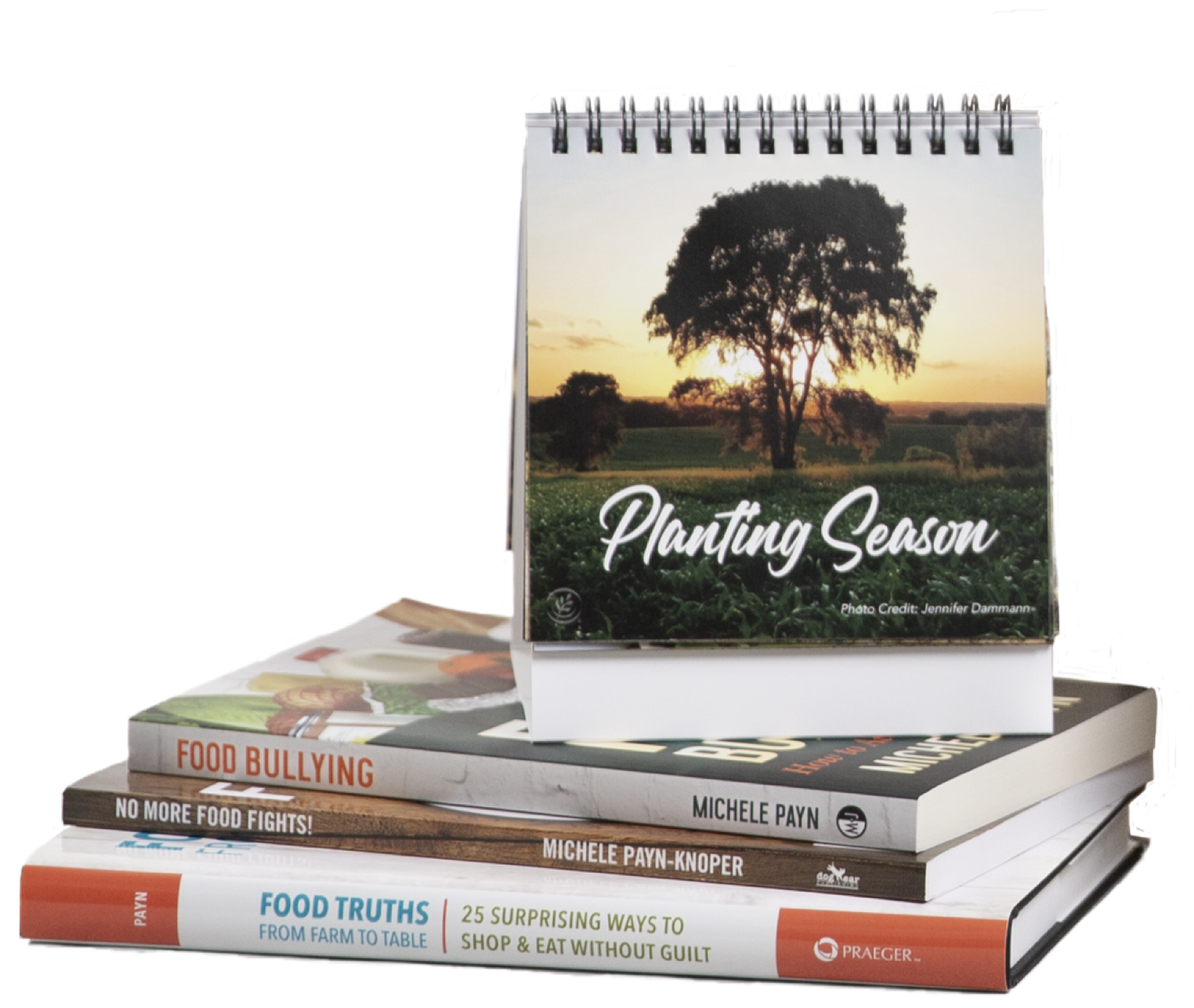
Michele Payn, CSP – one of only 900 Certified Speaking Professionals worldwide – has spent 25 years sitting at the table between farmers and food professionals. She grew up on a dairy farm, holds degrees in Agricultural Communications and Animal Science, and has co-hosted 140+ episodes the Food Bullying Podcast featuring registered dietitians and farmers in the same conversation. Her book Food Bullying: How to Avoid Buying B.S. is the IPPY Gold Medal winner in medicine, health and nutrition, endorsed by the International Food Information Council and leading RDNs across North America. She brings the farm to the food professional in a way no one else does.
CSP · IPPY Gold Medal winner · 140+ podcast episodes · 25+ countries · Farmer
A food bullying program is for you if...
- Your dietitians and healthcare professionals need science-based tools to address food fear without dismissing patient concerns
- Your conference audience needs to understand what's actually happening on farms – from someone who grew up on one
- You want a program that bridges nutrition science and agricultural science in a way that's engaging, not academic
- Your members are tired of being caught between evidence-based practice and the noise their clients bring from Instagram
Somehow our hunger for a feel-good story about our food has led to ludicrous label claims to bully people around their eating choices. Bull Speak (B.S.) refers to the bad behaviors, deceptive label claims, marketing half-truths, and unnecessary drama surrounding our food plates today. Michele shows how bullying leads to higher prices and fewer choices, especially for those with a limited income. If you haven't been bullied about food, you aren't paying attention – or you may be the bully (unintentionally, of course).
Solutions Michele delivers with this food bullying program:
- A clear framework for identifying and explaining food bullying to clients in plain language
- Neuroscience and neuromarketing tools that explain why clients believe what they believe about food
- Science-backed clarity on the most-asked food questions: GMOs, antibiotics, hormones, pesticides, organic vs. conventional
- A farm-to-table context that helps dietitians speak credibly about food production without needing a farming background
- Practical communication strategies for guiding clients toward evidence-based food choices without judgment
What is food bullying?
The need to position one food as superior to another lies at the heart of food bullying, which literally takes food out of someone's hand – by removing choice, creating emotion, or forcing an individual into groupthink mentality. As choices are removed, stress increases around eating the "right food." Michele Payn is a high-energy speaker who illustrates how this also gives power to fear and impacts our wellness. Victims are around every corner, such as:
- The homeless person who can no longer afford eggs because of price increases from regulations.
- A Michigan third grader who was bullied by her teacher over snack choices.
- The farmer who can no longer care for their land and animals the best way because of backlash from a sensationalized documentary.
- An Australian kindergartener who was sent home from school with a shaming note about a piece of homemade birthday cake.
- A new parent who is ostracized from a play group for not having the “right” brand of product.
Learning objectives from this popular breakout for dietitians & healthcare professionals
After this program, attendees will be able to:
- Define food bullying and recognize its tactics in food marketing, social media, and patient communication
- Explain the most common food fears – GMOs, antibiotics, pesticide residues, hormone claims – with confidence and scientific accuracy
- Use neuromarketing awareness to help clients distinguish evidence-based nutrition from fear-based marketing
- Connect agricultural production practices to nutrition outcomes in client conversations
- Guide clients toward food choices based on facts, not fear – without creating new anxiety
Available as: Keynote · Workshop · Half-day training · Webinar · Breakout session
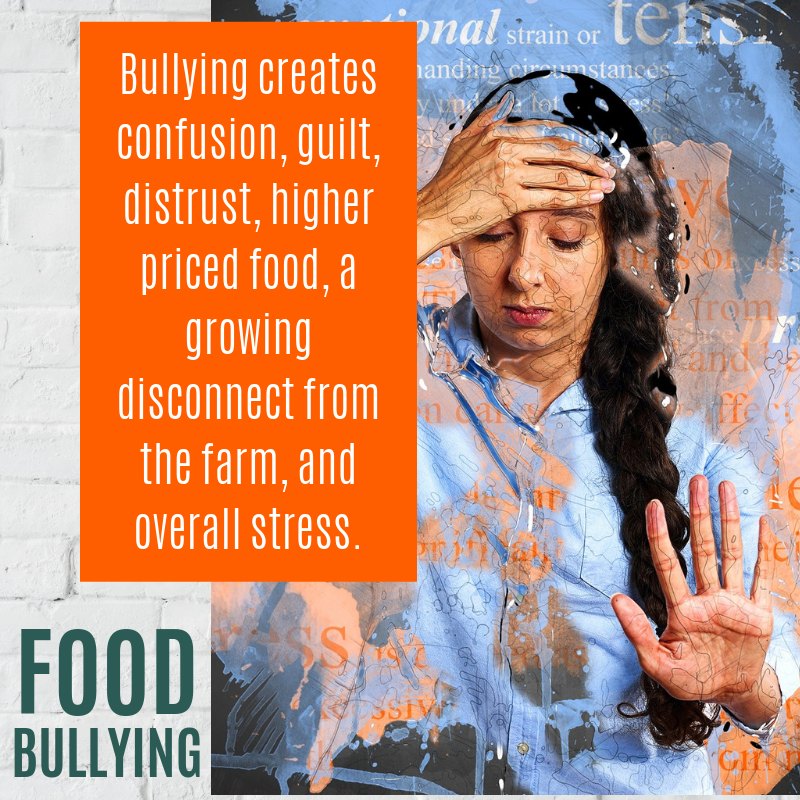
Food Bullying is a life-changing topic for anyone who eats. It's a candid look at food and farming today – and Michele has just the right energy to make it both comedic and compelling. It's a topic that your audience will thank you for bringing to your meeting. Listen in to the Food Bullying Podcast to get a flavor.
Dig deeper: Michele's Food Bullying: How to Avoid Buying B.S. – IPPY Gold Medal winner in medicine, health and nutrition – gives dietitians and healthcare professionals the science and stories to answer their clients' hardest food questions with confidence. Learn more →