





~ guest blog post by Dan Toland
As far as I can tell, I’m part of a transitional generation in an era of transitional communication.

While not empowering farmers to agvocate through social media, Dan enjoys a cold Yuengling and wallowing in Cleveland sports-fan misery.
At 29 years of age, digital communications and connections come easy to me. I do much more “computing” on the Internet-connected device still referred to as a “phone” in my pocket today than I did on the memory-devoid box we called a computer in 1988.
Yet I remember when “look it up” meant dusting off the 1976 World Book Encyclopedia, and using the dreaded “card catalog” because Google wasn’t a valid research tool, and when in 1996 my mother proclaimed we’d never connect to the Internet because it was “full of perverts and predators.” We got our first dialup Internet connection a year later.
Similarly, I’ve had many farmers tell me they are proudly computer-free and don’t pay attention to this Internet stuff. My answer to them is ‘you may not, but the vast majority of the world does, and they’re using it to talk about what you do.’
The ability for anybody to immediately post, share and discuss information with a worldwide online audience is quickly exposing us to new “trustworthy” sources of information.
According to the Center for Food Integrity, the amount of people who trust local TV news as the most credible source on food system issues plummeted 33 percent in the past year, while newspaper credibility dropped 17 percent. Websites, on the other hand, increased in trustworthiness by 52 percent!
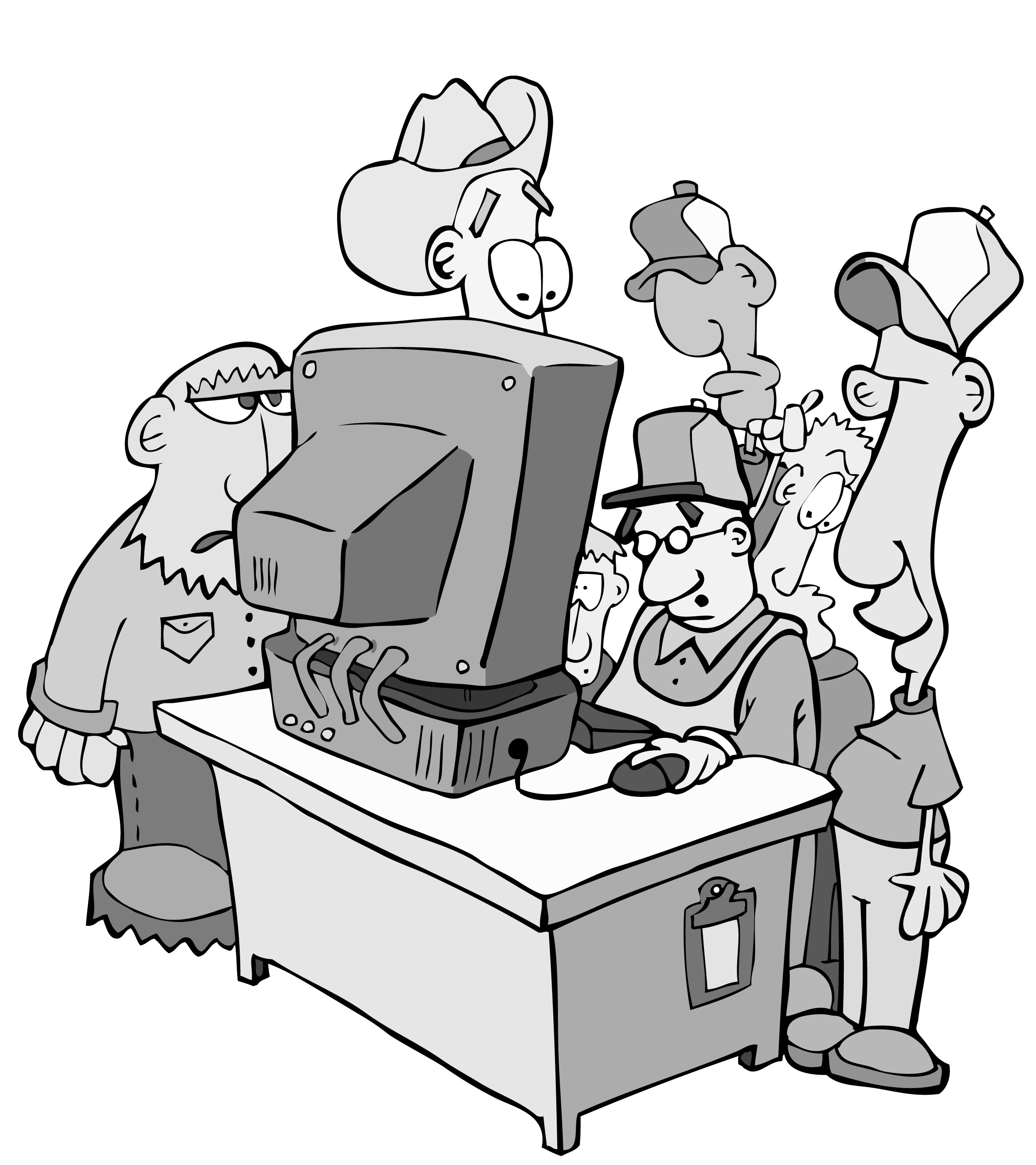
Are you one of those who wants to avoid the "computer fad?"
If you’re a farmer today, you are also part of this transition. All the kicking and screaming in the world isn’t going to change that. That’s why it’s imperative to step outside your comfort zone and be engaged in real, live and honest-to-goodness online conversations about what you do with an audience that is eager to talk.
By nature, farmers are an independent, heady and determined lot, which sometimes comes across a bit brash when they start chatting online with non-farming counterparts.
To make it a bit easier, I offer these 10 tips to make your online conversations productive and engaging, and help establish credibility with others:
- Always be transparent. Use your real name (or a variation of it), your real photo and your real story. People are naturally skeptical of those hiding behind fake names, and can see right through pretenders.
- Do your homework. Know who you’re talking to and if they are worth engaging. Check their Facebook and Twitter accounts. Examine previous conversations. Do they personally attack others and remain close-minded to outside opinion or constructive dialogue? If so, there are better conversations to be had. Focus your efforts on reasonable and worthwhile conversation.
- Be open to other opinions. We have two eyes, two ears and only one mouth for a reason. Brush aside your preconceptions and seek to understand another’s point of view before judging them. Ask non-threatening questions in a courteous manner. And never personally attack, demean or call another person names. It only hurts you, your credibility, your profession, and your brethren within it.
- Keep your cool AND LAY OFF THE CAPS LOCK AND EXCLAMATION POINTS!!!!!!! It’s best to keep your emotions and your keystrokes in check. Always read your posts twice before sending and think about how the message may be perceived by others. Grammar and spelling checks are good too.
- Don’t rely on clichés, industry-related jargon and overused rhetoric. I recommend avoiding the use of “safe, abundant, food supply,” “farming is the original green industry,” “profitability and product,” and other such phrases. I’m tired of them, and the consuming public is too. Talk from your own passion and experiences, and use simple terms to tell your story.
- Back up your statements by linking to web content supporting them. It might be a study, blog post or article on another website, but it’s always good to link to something within your conversation so others can easily refer to it.
- It’s a conversation, not a lecture. Focus not upon the information you want to give, but instead focus on the information the other person wants to know. Mostly, they’ll want to know that you share their values. Stop spouting facts and show your personality, it goes a long way.
- The sky isn’t falling! Chicken Little arguments from both ends of a contentious issue get us all nowhere. For example, the argument that all farmers beat their animals is as ludicrous to the public as saying all your meat, milk and eggs are going to disappear. We must stop shouting from our corners, put down the megaphones and come together to meet one another in level-headed conversation.
- Never underestimate the power of laziness! – A rule of thumb is that 90 percent of users only consume information online, while only 10 percent create it. Think of how many times you’ve read comments online but never contributed to them. Do your part to increase agriculture’s role in that 10%….others will read it!
- Remember that anybody’s voice can be heard and travel quickly through social media. Don’t be afraid to use yours!
Have your own tips? Practice your online communication skills by sharing them in the comments below!
Dan Toland is a communications specialist with the Ohio Farm Bureau Federation, and author of “Discover Your Social Web: An Ohio Farm Bureau Guide to Social Media,” named the best communications tool in 2009 by American Farm Bureau and used in training for organizations throughout North America. Follow him on Twitter @d_toland & @OhioFarmBureau.
0 Comments