





What Conventional, Organic, & Regenerative Farming Practices Mean for Your Food and Soil Health
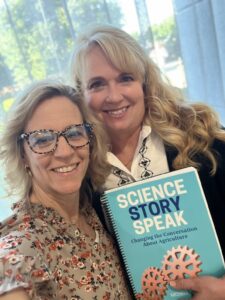 By Amy Hays, co-author of Science Story Speak
When you pick up a package of meat, produce or grains at the store, it is natural to wonder how this food was grown or raised.
What practices were used on the farm or ranch? Will my choice support healthier soil, cleaner water and a more resilient food system?
These questions reflect real care for what ends up on your table, and I respect that deeply.
As an ecologist with more than 25 years supporting land and water stewardship across Texas and Oklahoma, I have worked alongside farmers and ranchers who face the daily realities of producing food while caring for private lands.
Agriculture is a classic wicked problem, complex, interconnected and without simple answers. But there is hope when we approach it with science-based clarity and empathy for everyone involved.
This post draws directly from practical insights to explain the differences between conventional, organic and regenerative agriculture. The goal is to help everyday consumers understand what each approach means for the food you buy and the land where it was produced.
If you stop reading here, take this away:
- Conventional and organic focus primarily on production methods aimed at the final product, the crop or animal.
- Regenerative agriculture shifts the focus to the land itself, how management improves soil function and ecosystem health so that healthy food emerges from healthier systems over time. The focus is on soil health.
Conventional and Organic: Methods Centered on the Product
Conventional agriculture is about meeting the crop or animal’s immediate needs to achieve desired yields and volume. Producers add inputs, natural or synthetic, to encourage growth, control pests and maintain output.
Many assume this means piling on chemicals, but the reality is more balanced.
Conventional systems often use a mix of inputs, including fertilizers derived from mined minerals such as phosphorus and potassium as well as synthetically produced nitrogen to support crop or animal needs.
Many operations follow best-management practices to use inputs efficiently while delivering reliable food at scale.
Organic agriculture follows strict USDA certification standards.
It prohibits most synthetic fertilizers, pesticides and genetically engineered crops, relying instead on natural inputs such as compost, manure, cover crops and approved biological controls.
Organic is not a “doing nothing and letting nature take its course” system. It requires active, often more labor-intensive management within defined rules to produce food while promoting ecological balance.
It would be a mistake to think one system is all about synthetics and one system is all about organics
- You can use many natural additives in conventional systems and still not qualify as organic.
- Organic producers may use certain approved substances below strict thresholds and remain certified organic.
Both systems concentrate on the product outcome.
Conventional allows a broader range of inputs to achieve volume.
Organic minimizes and restricts inputs to meet certification standards.
The good news is you can have healthy soils in conventional or organic production systems if that is the goal. Understanding and implementing changes that are geared toward that outcome make it possible in all systems.
What is harder is the timeline and sometimes the expense.
There can be trade-offs between what is possible and what is probable.
Regenerative Agriculture: A Mindset Centered on the Land
Regenerative agriculture is not a production method like the other two.
It is a principles-based mindset about how you manage the land to support long-term productivity and ecosystem function.
Think of it like coaching an Olympian: the farmer or rancher helps the athlete, the crop or animal, reach its full potential by first optimizing the playing field, the soil and the surrounding environment.
Regenerative draws from observations of healthy natural systems and applies ecological principles to working lands.
Common principles include:
- Know your context. Every operation has a unique soil history, climate, goals and challenges. What works in one place requires thoughtful adjustment elsewhere.
- Cover the soil. Minimize bare ground to protect the living microbiome, reduce erosion and moderate temperature extremes, much like covering your skin.
- Limit unnecessary disturbances- avoid practices like excessive tillage or unnecessary additions (natural or synthetic) that can disturb the soil's natural life. At the same time, remember that some natural impacts, like the right-timed fire in certain ecosystems, can actually be helpful.
- Maximize diversity. Increase plant, animal and microbial variety above and below ground through rotations, cover crops, companion planting or multi-species grazing.
- Maintain living roots year-round. Keep living plants in the soil as much as possible to feed soil organisms and keep nutrient, water and carbon cycles functioning.
- Integrate livestock thoughtfully. Where grazing animals fit the natural system, as in rangelands and grasslands which cover about half of the world’s land surface, they can cycle nutrients, stimulate plant growth and improve soil function when managed adaptively.
These principles are flexible and can be applied in both conventional and organic systems.
As many ranchers put it, it is not about the cow, it is about the how.
A monoculture organic farm may still face degraded soil if it ignores these principles. A conventional operation can adopt no-till, cover crops and adaptive grazing to improve land function over time. Success is measured by direction and continuous improvement: rising soil organic matter, better water infiltration, greater biodiversity and more resilient nutrient cycling.
Context is everything.
A depleted sandy soil in a dry climate improves more slowly than richer soils, and expectations must be realistic.
Why These Differences Matter When You Buy Food
Your choices indirectly shape the systems that produce it.
Conventional agriculture has enabled high productivity and affordability, helping feed growing populations, though intensive input use can sometimes contribute to challenges such as nutrient runoff or soil degradation if not managed carefully.
Organic certification assures that certain synthetic inputs were avoided and specific practices followed.
Meta-analyses of peer-reviewed studies show organic yields are typically around 18 to 25 percent lower than conventional on average, though the gap narrows significantly, sometimes to 5 to 13 percent or less, with strong management, diversified rotations, certain crops such as legumes and perennials or under stressful conditions like drought, thanks to improved soil structure and water-holding capacity in well-managed systems.
Organic often shows benefits such as higher soil organic matter and reduced synthetic chemical impacts per acre, though it may require more land for equivalent output in some cases.
Regenerative management adds a land-restoration focus.
Collaborative research between Oklahoma State University Extension and Texas A&M AgriLife in the Southern Great Plains is evaluating how practices such as cover crops, no-till and integrated livestock affect soil health, water capture and resilience in semi-arid conditions.
These approaches often enhance soil organic carbon, improve aggregation and boost water-holding capacity, potentially reducing the need for external fixes over time and supporting broader benefits like cleaner water and more wildlife habitat.
Regenerative is not new. It applies decades of ecological science, but ongoing university studies are helping us measure and scale it while respecting the diversity of private lands.
Importantly, regenerative principles can strengthen both conventional and organic operations.
Some monoculture organic farms struggle with pest issues and lower yields when soil health is overlooked.
Some conventional systems require ever-increasing inputs when land function declines.
All approaches play roles in our food system, and many producers blend elements successfully.
Practical Takeaways for Consumers and Producers
No single label guarantees perfection, and farmers and ranchers across systems work hard under real constraints of weather, markets, labor and economics.
As a consumer, ask questions at markets or through farm transparency programs.
Look beyond labels to the full story of land stewardship.
My hope stems from the innovation and care I have witnessed in Texas and Oklahoma producers for more than two decades. Land-grant university research provides a reliable evidence base.
Private land stewards – farmers and ranchers – test and refine practices daily.
Through practical adult learning, targeted studies, and respectful collaboration, we can advance soil health, water stewardship and viable food systems together.
Selected References (primarily from land-grant universities and peer-reviewed sources):
- Oklahoma State University Extension. Regenerative Agriculture: An Introduction and Overview. AFS-9412. August 2024.
- Seufert, V., Ramankutty, N., and Foley, J.A. Comparing the yields of organic and conventional agriculture. Nature. 2012.
- Collaborative Texas A&M AgriLife and OSU research on regenerative practices in the Southern Great Plains (USDA NIFA-funded projects, 2021 to present).
About the author

0 Comments